Key takeaways
- Compare marine deep-cycle and dual-purpose batteries for running a boat stereo all day: an OPTIMA BlueTop AGM, a RELiON LiFePO4 and a WEIZE deep-cycle battery, plus sizing and wiring guidance.
As an Amazon Associate we earn from qualifying purchases.
Affiliate Disclosure: This article contains affiliate links. If you buy through a link on this page, we may earn a commission at no extra cost to you.


A marine stereo is a deceptive load. A head unit alone sips current, but add an amplifier, a subwoofer, and a long afternoon at anchor with the engine off, and the stereo becomes one of the heaviest steady draws on the boat. The battery that runs it has to do a job a starting battery is not built for: deliver moderate current for hours, survive being drawn down and recharged again and again, tolerate vibration and a damp environment, and still leave you able to start the engine at the end of the day. That is why the right answer to “which battery for my boat stereo” is almost always a deep-cycle or dual-purpose marine battery, ideally on a house circuit separated from the engine-starting battery. This guide explains how to size a battery for a stereo system, then compares three marine batteries of the correct type — an AGM dual-purpose battery, a lithium iron phosphate deep-cycle battery, and a sealed lead-acid deep-cycle battery — so you can match the chemistry and capacity to your boat and your listening habits. Specifications below are taken from the manufacturers’ and sellers’ published product information; we have not bench-tested these batteries ourselves.
What a Marine Stereo Actually Needs From a Battery
Three things decide whether a battery suits stereo duty. The first is usable capacity over hours, measured in amp-hours. A modest head unit and speakers might draw 3 to 5 amps at cruising volume. Add a typical marine amplifier and the average draw at lively volume commonly lands in the 8 to 15 amp range, with peaks far higher on bass notes. Four hours at an average of 10 amps is 40 amp-hours of energy. The second factor is depth of discharge. A lead-acid battery, whether flooded, AGM, or sealed calcium-alloy, should routinely be drawn down only to about half its rated capacity if you want it to last; a lithium iron phosphate battery can be used far more deeply, with makers rating their cells for thousands of cycles. So a 100 amp-hour lead-acid battery offers roughly 50 usable amp-hours in regular service, while a 100 amp-hour LiFePO4 battery offers close to its full rating. The third factor is clean, stable voltage. Amplifiers are sensitive to voltage sag: as a battery empties and its voltage slides, amplifiers work harder, run hotter, and can clip or shut down. Lithium batteries hold a flatter voltage curve through most of their discharge, which is one reason amplified systems sound consistent for longer on lithium.
Just as important is architecture. The safest setup for a serious stereo is a dedicated house battery, or a dual-purpose battery, wired so the stereo cannot drain the starting battery. A battery switch or automatic charging relay lets the alternator charge both banks while keeping them isolated at anchor. Whatever battery you choose from the list below, treat it as the stereo and house bank, and keep a healthy starting battery in reserve.
How We Chose These Batteries
Every pick here is a 12-volt marine battery of the deep-cycle or dual-purpose type — no pure starting batteries, no automotive batteries with a marine label pasted on, and no products from outside the category. The three picks cover the three chemistries a boat owner will realistically consider: AGM for a maintenance-free dual-purpose battery that can also crank an engine, LiFePO4 for the lightest weight and deepest usable capacity, and a sealed lead-acid deep-cycle battery for a straightforward house bank in a standard group size. All three are Group 31 or equivalent large-case batteries, because stereo systems with amplifiers reward capacity, and all three are sold as marine or marine-suitable batteries by their makers.
1. OPTIMA BlueTop D31M — Best Dual-Purpose AGM for Stereo and Starting
The OPTIMA BlueTop D31M (ASIN: B00099DW6G) is the dual-purpose member of OPTIMA’s marine line: the light-grey-case BlueTop models are designed to serve both as a starting battery and as a cycling battery for boats with heavy electrical accessories, which is exactly the profile of a boat whose stereo, electronics, and engine all share one battery compartment. OPTIMA rates the D31M at 900 cold cranking amps, so it starts an engine with authority, while its deep-cycle capability lets it run accessories at anchor without the rapid wear a pure starting battery would suffer. The published case dimensions are 12-13/16 by 6-1/2 by 9-3/8 inches, and it weighs 59.8 pounds — solidly in line with a lead-acid battery of this size, and a figure to plan around if the battery box is in a tight locker.
The construction is what separates it from a conventional flooded battery. OPTIMA’s spiral-wound AGM design makes the battery spillproof, maintenance-free, and mountable in virtually any position, which matters in a boat where the battery may sit at an angle or in a compartment you cannot easily reach to check electrolyte. The maker claims more than fifteen times the vibration resistance of a standard flooded battery and up to three times the service life; vibration resistance is not a paper spec on a boat, because pounding through chop is what shakes plates apart in lesser batteries. Dual terminals make wiring a stereo amplifier alongside the factory cables tidier.
For stereo duty specifically, the D31M suits the owner who wants one battery type to do everything: start the engine in the morning, run the stereo and electronics at anchor, and start the engine again in the evening. Its limitation is the shared limitation of lead-acid chemistry — plan on using about half its capacity routinely, keep it on a proper AGM charge profile, and recharge it promptly after a deep day rather than leaving it sitting discharged. Boats with very large amplifier systems will still be better served by a dedicated house bank, but as a single dual-purpose battery, the BlueTop is the most stereo-friendly starting-capable option here.
2. RELiON RB100 — Best LiFePO4 for Long, Loud Days at Anchor
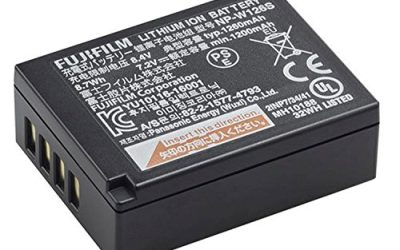
The RELiON RB100 (ASIN: B0BMT73R2H) is a 12.8-volt, 100 amp-hour lithium iron phosphate battery in a Group 31 case, built for exactly the applications where a stereo spends its life: boats, trolling motors, RVs, and off-grid systems. RELiON rates it for roughly 3,500 to 5,000 cycles, an order of magnitude beyond what lead-acid delivers, and gives it an IP67 waterproof rating, which is a meaningful specification in a marine battery compartment that sees spray and condensation. Because LiFePO4 chemistry tolerates deep discharge, nearly all of its 100 amp-hours are usable in normal service — in practical stereo terms, that is roughly double the listening time of a 100 amp-hour lead-acid battery used within its comfortable depth of discharge, at a fraction of the weight lead-acid would need for the same usable energy.
The flat discharge curve is the second stereo advantage. Voltage stays steadier through most of the discharge, so an amplifier fed by the RB100 keeps its composure late into the day instead of sagging as a lead-acid bank empties. For a system with a subwoofer that pulls hard on peaks, that steadiness is audible. The battery’s internal management protects the cells, and RELiON backs the RB100 with a ten-year warranty according to its listing, the longest backing of any pick in this guide.
Two cautions belong with any lithium house bank. First, charging: confirm your shore charger and alternator charging path offer a lithium profile or are otherwise compatible, and never leave a lithium battery on a charger setting designed to equalise flooded batteries. Second, the RB100 is a house battery, not an engine-cranking battery; keep it on the stereo and accessories circuit and let a starting or dual-purpose battery turn the engine over. Set up that way — lithium for the house loads, a cranking battery for the starter — it is the strongest choice in this guide for owners who anchor out and play music for hours.
3. WEIZE 12V 100Ah Deep Cycle, Group 31 — Best Straightforward Sealed House Battery
The WEIZE 12V 100Ah Deep Cycle Battery (ASIN: B0BGKHQQTP) is a sealed lead-acid deep-cycle battery in a Group Size 31 case, rated at 100 amp-hours and listed by its maker for RV, solar, camping, cabin, marine, and off-grid use. Its published dimensions are 12.99 by 6.73 by 8.34 inches and it weighs about 60 pounds, so it drops into the same battery boxes and trays as other Group 31 batteries — an easy physical match if you are replacing an existing house battery of that size. WEIZE quotes a maximum discharge current of 1,150 amps and a low self-discharge rate of about 3 percent per month, with the sealed construction meaning no watering and no acid to spill in the compartment.
The battery uses a heavy-duty calcium-alloy grid, a design aimed at service life in both float and cyclic applications, which covers the two lives a stereo house battery leads: sitting on a maintainer in the marina, and cycling at anchor on the weekend. As with the OPTIMA, plan your listening around roughly half the rated capacity for routine use, and top-charge it every two to three months in storage rather than letting it sit flat; the maker’s own guidance warns against storing it discharged for long periods. Up to four of these batteries can be connected in parallel if a big stereo and a growing list of house loads outgrow a single battery, which gives this pick a simple expansion path that stays within one product line.
The WEIZE is the pick for an owner who wants a conventional, sealed, fit-and-forget house battery in a standard size and is content to work within lead-acid’s depth-of-discharge limits. It will not match the lithium battery’s usable capacity per case or per pound, and it should not be asked to crank a large engine as its main job, but as a dedicated stereo and house bank it is honestly specified and correctly typed for the work.
Sizing Your Battery for Your Stereo
Work backwards from your system. Add up the average draw, not the peak printed on the amplifier box: a head unit typically draws a few amps, each amplifier adds an average draw that depends heavily on volume and how much subwoofer the system has, and every other house load sharing the bank — lights, a chartplotter, phone charging — counts too. Multiply the total average amps by the hours you want at anchor. That gives the usable amp-hours you need. Then divide by the share of the battery you are willing to use: about half for lead-acid, most of the rating for LiFePO4. A system averaging 10 amps for five hours needs 50 usable amp-hours, which means roughly a 100 amp-hour lead-acid battery or a smaller lithium battery on paper — though choosing the 100 amp-hour lithium buys a large reserve for louder days.
Leave margin. Batteries age, cold days reduce lead-acid output, and nobody turns the volume down because a calculation said to. If your maths lands exactly on a battery’s comfortable limit, step up a size or plan a parallel battery rather than living on the edge of a flat bank and a silent stereo — or worse, an engine that will not start because the stereo shared the starting battery.
Wiring and Care Notes That Protect Your Sound and Your Battery
Amplifier wiring matters as much as the battery. Run the amplifier’s power and ground cables in the gauge the amplifier maker specifies for the length of the run, keep the ground short and to a solid common point, and fuse the positive cable close to the battery. Undersized cable causes voltage drop that no battery can compensate for, and voltage drop at the amplifier shows up as distortion and heat. Keep the stereo’s memory and main feeds on the house side of the battery switch so a flat stereo session can never strand the boat.
Charging discipline decides how long any of these batteries lasts. Recharge after use rather than before the next trip, use the charge profile that matches the chemistry — AGM, sealed lead-acid, and lithium each want their own settings — and keep terminals clean and tight, because a corroded connection in a marine compartment adds resistance exactly where an amplifier draws hardest. In storage, keep lead-acid batteries topped up periodically, as the WEIZE guidance notes, and store lithium batteries partially charged if the maker recommends it.
Frequently Asked Questions
Can I run my boat stereo off the starting battery? For a short stop with a small head unit, many boats do. For an amplified system playing for hours, no — a starting battery is built for short bursts, deep discharges shorten its life quickly, and a flat starting battery strands the boat. Put the stereo on a deep-cycle or dual-purpose house battery.
Is lithium worth it for a stereo battery? If you anchor for long sessions with an amplifier and subwoofer, the usable capacity and flat voltage curve make a noticeable difference, and the cycle life is far longer. If your stereo is a head unit and two speakers used for an hour at lunch, a lead-acid deep-cycle battery covers the job comfortably.
How many amp-hours do I need for an amplifier? Estimate the system’s average draw in amps, multiply by your hours at anchor, and then double the result for lead-acid or use most of it directly for lithium. A worked example is in the sizing section above.
Can one of these batteries replace both my batteries? The OPTIMA BlueTop D31M is the dual-purpose pick designed to start and cycle, so it can serve as a single-battery solution on smaller boats. The RELiON and WEIZE are house batteries; keep a separate starting battery with them.
Why does my stereo cut out at high volume late in the day? Usually voltage sag: as a lead-acid battery empties, voltage falls under load, and the amplifier’s protection or the head unit gives up on bass peaks. A larger bank, a lithium battery’s flatter curve, and correctly sized power cables all address it.
The Bottom Line
Match the battery to the job the stereo actually does. If one battery must start the engine and run the music, the OPTIMA BlueTop D31M is the dual-purpose AGM built for that double life. If the stereo has its own house circuit and you anchor out for hours with an amplifier working hard, the RELiON RB100’s usable capacity, steady voltage, and cycle life make it the strongest stereo battery here. If you want a conventional sealed house battery in a standard Group 31 case that can be paralleled as your system grows, the WEIZE 100Ah deep-cycle is the straightforward choice. Whichever you pick, keep the stereo off the starting battery, size for more hours than you think you need, and recharge promptly — that combination is what turns a good battery into years of uninterrupted music on the water.