Our Short List of 3
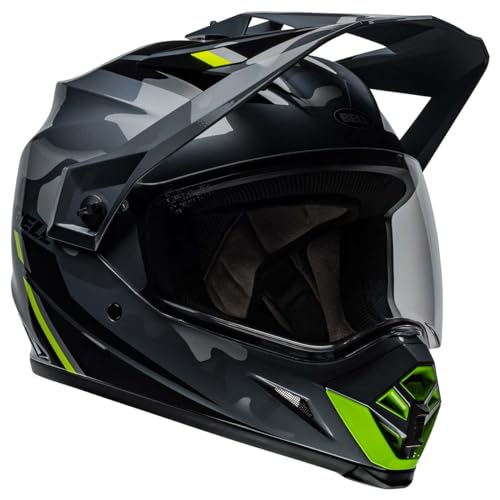
- Best for: Riders who want one affordable helmet for both trail riding and road sections.
- MIPS slip-plane liner helps reduce rotational forces from certain impacts
- 3 shell sizes across the size range
- Ionic+ quick-drying interior padding helps manage sweat while fighting odor
- Lightweight polycarbonate/ABS shell construction

- Best for: Adventure touring riders who want modular convenience and the current ECE 22.06 standard.
- Advanced polycarbonate shell with CAD-refined aerodynamics
- Aero-tuned ventilation with one large top intake vent and exhaust vents
- Dual-position mouth vent
- EverClear shield with fog-free technology and anti-scratch coating

- Best for: Budget-conscious riders who want a modular adventure helmet with a drop-down sun visor.
- Advanced polycarbonate shell engineered for lightweight strength and impact displacement
- Dual-density EPS for superior energy displacement
- KwikWick II comfort liner, moisture wicking, removable and washable
- KwikFit cheek pads for easy on and off
All 4 Picks at a Glance
| Product | Specs | Action |
|---|---|---|
| Bell MX-9 Adventure MIPS |
| Check price on Amazon |
| Scorpion EXO-AT960 |
| Check price on Amazon |
| Scorpion EXO-AT950 |
| Check price on Amazon |
 Alpinestars SM3 Radium |
| Check price on Amazon |
Key takeaways
- The best motorcycle enduro helmet pairs a peak visor with goggle fit and strong ventilation. Compare 5 dual-sport and ADV helmets still selling on Amazon.
Enduro riding asks a helmet to do two jobs at once. On slow technical trails the pace drops, the effort climbs, and heat builds fast, so the lid has to breathe like a motocross helmet. On faster fire roads and short road links, the same helmet has to shield the eyes from sun, dust and roost, and keep wind noise manageable. A pure road helmet fogs up and cooks the rider off road, while a pure motocross helmet leaves the face exposed on every paved section.
This article is for trail riders, dual-sport commuters and backcountry route riders who need one helmet for mixed terrain. The five helmets below were chosen from names and specifications published on their Amazon product pages, with attention to certification, ventilation, weight and whether each lid works with goggles, a face shield, or both.
Quick Picks
As an Amazon Associate we earn from qualifying purchases
| Product | Best for | Key spec from title |
|---|---|---|
| Bell MX-9 Adventure MIPS | One affordable lid for trail and road | MIPS slip-plane liner |
| Scorpion EXO-AT960 | Modular convenience on long tours | Flip-up chin bar, ECE 22.06 |
| Scorpion EXO-AT950 | Modular ADV helmet on a budget | Internal drop-down sun visor |
| O’Neal Sierra | Lightest budget dual-sport lid | ABS shell, 1590 g |
| Alpinestars SM3 Radium | Hard enduro and competition riding | 1430 g ECE shell, ECE 22.06 |
How to Choose
Certification and shell construction
Start with the safety label, because it is the one feature that cannot be judged by looks. DOT FMVSS 218 is the legal minimum in the United States, while ECE 22.05 and the newer ECE 22.06 standard demand a wider range of impact tests, so an ECE label is worth seeking out. Shell material matters too: polycarbonate and ABS shells keep costs down and absorb impacts well, while composite and carbon shells save weight at a higher cost. Rotational protection is the next thing to check, whether it is a MIPS slip-plane liner or a low-friction liner coating, since angled impacts are common when a bike slides out on loose ground.
Peak visor, shield and goggles
The peak visor is what separates an enduro helmet from a road helmet. It blocks low sun and deflects roost thrown up by the bike ahead, but a fixed peak catches wind at highway speed, so a removable or adjustable peak is a real advantage for riders who link trails with paved roads. Next, decide how the eyes get protected. An integrated face shield is convenient for road sections and bad weather, while a goggle-only setup gives better airflow and a wider field of view in dust. The best dual-sport helmets allow both: the shield lifts high enough to clear goggles, or removes entirely.
Ventilation and weight
Slow technical riding generates far more heat than highway cruising, because the rider works hard while the bike moves slowly and airflow drops. Count the vents: a good enduro helmet has multiple intake vents across the chin and crown plus exhaust ports at the rear, and closable vents help on cold mornings. Weight is the other half of comfort. The helmets in this article range from about 1430 g to about 1850 g, and that difference is felt in the neck by the end of a long day on rough trails. A lighter helmet with strong airflow beats a heavier helmet with more features.
Fit, liner and retention
A helmet that does not fit correctly cannot protect properly, so measure head circumference and check the maker’s size chart instead of guessing from a previous helmet. Most enduro helmets suit an intermediate oval head shape, and three shell sizes across the range give a better fit than a single shell stuffed with thick padding. A removable and washable comfort liner matters because enduro riding is sweaty work, and moisture-wicking fabric keeps the interior bearable. Check the retention system as well: a double-D ring is the classic secure closure, while a micrometric buckle is faster with gloves on.
The 5 Best Options
Bell MX-9 Adventure MIPS
- Best for: Riders who want one affordable helmet for both trail riding and road sections.
- MIPS slip-plane liner helps reduce rotational forces from certain impacts
- 3 shell sizes across the size range
- Ionic+ quick-drying interior padding helps manage sweat while fighting odor
- Lightweight polycarbonate/ABS shell construction
Riders who want one affordable helmet for both trail riding and road sections.
The listing weight field is unreliable, so confirm fit from the size chart; the shield is not photochromic, so carry a tinted option or goggles for bright days.
The Bell MX-9 Adventure MIPS is the value pick in this group, and it earns that spot by covering the basics well rather than chasing exotic materials. The MIPS slip-plane liner addresses rotational forces from angled impacts, the lightweight polycarbonate and ABS shell keeps the helmet manageable on long days, and the integrated face shield pairs with a peak visor for mixed road and trail use. Three shell sizes across the range help the fit, and the quick-drying Ionic+ interior padding manages sweat while fighting odor. It also accepts goggles from most makers, so riders can switch between shield and goggles depending on the terrain.
Watch out for: The listing weight field is unreliable, so confirm fit from the size chart; the shield is not photochromic, so carry a tinted option or goggles for bright days.
Scorpion EXO-AT960
- Best for: Adventure touring riders who want modular convenience and the current ECE 22.06 standard.
- Advanced polycarbonate shell with CAD-refined aerodynamics
- Aero-tuned ventilation with one large top intake vent and exhaust vents
- Dual-position mouth vent
- EverClear shield with fog-free technology and anti-scratch coating
Adventure touring riders who want modular convenience and the current ECE 22.06 standard.
At about 1850 g it is the heaviest helmet in this article, so try the fit before a long trip; removing the peak changes airflow and noise.
The Scorpion EXO-AT960 is the modular option for riders who tour long distances and want to lift the chin bar at fuel stops, border checks and trailside breaks without removing the helmet. Its advanced polycarbonate shell uses CAD-refined aerodynamics for a streamlined profile that reduces lift and turbulence, and the aero-tuned ventilation system pushes cool air in through one large top intake while exhaust vents move hot air out. The EverClear shield resists fog and scratches and blocks 95 percent of UV-A and UV-B light, while the external peak visor removes easily for cleaner highway aerodynamics. Speaker pockets are built in for a communication system.
Watch out for: At about 1850 g it is the heaviest helmet in this article, so try the fit before a long trip; removing the peak changes airflow and noise.
Scorpion EXO-AT950
- Best for: Budget-conscious riders who want a modular adventure helmet with a drop-down sun visor.
- Advanced polycarbonate shell engineered for lightweight strength and impact displacement
- Dual-density EPS for superior energy displacement
- KwikWick II comfort liner, moisture wicking, removable and washable
- KwikFit cheek pads for easy on and off
Budget-conscious riders who want a modular adventure helmet with a drop-down sun visor.
This model carries DOT certification only, with no ECE rating on the listing, while the AT960 adds ECE 22.06; confirm the size, since only a few units were left on some sizes.
The Scorpion EXO-AT950 is the predecessor to the AT960 and remains a strong choice for riders who want a modular adventure helmet at a lower cost. Its advanced polycarbonate shell pairs with dual-density EPS for energy displacement, and the KwikWick II comfort liner wicks moisture, removes easily and washes for long-term freshness. The oversized eye port gives a wide field of view, the optically clear shield carries fog-free technology and an anti-scratch coating, and the EverClear SpeedView internal drop-down sun visor slides down with one hand. Three shell sizes keep weight and fit balanced across the size range, and the 5-year warranty matches the newer model.
Watch out for: This model carries DOT certification only, with no ECE rating on the listing, while the AT960 adds ECE 22.06; confirm the size, since only a few units were left on some sizes.
O’Neal Sierra
The O’Neal Sierra is the budget pick here, and it covers the enduro essentials without extras that push the cost up. The ABS shell weighs 1590 g, which is light for this price, and the helmet meets both DOT FMVSS 218 and ECE 22.05 standards. An integrated face shield covers the eyes without separate goggles, the moisture-wicking comfort liner removes and washes, and the padded chin strap closes with a double-D safety lock. The peak visor shields against sun and roost, and the helmet is designed for street, enduro, side-by-side and adventure riding. Note that the Amazon listing shows the model name Sierra R with part number 0818-701.
Specs
- ABS shell, weight 1590 g
- Meets DOT FMVSS 218 and ECE 22.05 safety standards
- Integrated face shield
- Moisture-wicking, removable and washable comfort liner
- Padded chin strap with double-D safety lock
- Peak visor for sun and roost protection
- Designed for street, enduro, side-by-side and adventure riding
Best for: Riders who want the lightest budget dual-sport helmet with both DOT and ECE certification.
Watch out for: Stock was not directly verified on the listing, so check availability before ordering; the helmet runs small according to rider reports, so consider sizing up if between sizes.
Alpinestars SM3 Radium
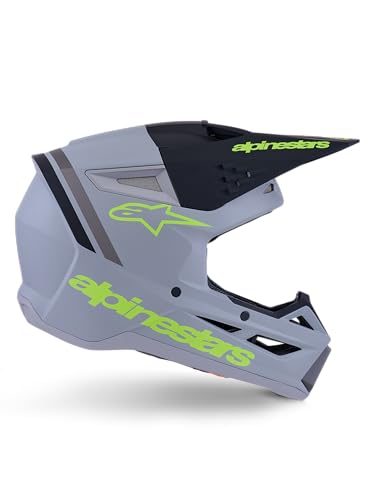
- Best for: Hard enduro and competition riders who want the lightest certified protection with maximum airflow.
- Thermo-injected polymer shell with variable thickness
- Weight 1430 g ECE and 1460 g DOT
- Ten intake vents and seven exhaust ports for maximum airflow
- Patented low-friction liner coating reduces rotational forces on oblique impacts
Hard enduro and competition riders who want the lightest certified protection with maximum airflow.
There is no integrated face shield, so goggles are required; the competition focus means less touring convenience than the modular picks.
The Alpinestars SM3 Radium is the competition-oriented pick, built for hard enduro and motocross, not touring comfort. Its thermo-injected polymer shell uses variable thickness for impact protection while keeping weight to 1430 g under ECE rules and 1460 g under DOT rules, the lightest helmet here. Ten intake vents and seven exhaust ports move plenty of air for all-day riding in heat, and the patented low-friction liner coating reduces rotational forces by mimicking the slip plane of the brain’s natural fluid layer. The visor release system deploys under a set force to reduce neck loads in a crash, and integrated hydration tube channels suit long trail days.
Watch out for: There is no integrated face shield, so goggles are required; the competition focus means less touring convenience than the modular picks.
Which One Fits Your Situation
You ride mostly technical trails and want the lightest protection
Pick the Alpinestars SM3 Radium. At 1430 g under ECE rules it is the lightest helmet here, the ten intake vents and seven exhaust ports keep air moving at slow speeds, and the visor release system adds protection when branches catch the peak. Bring goggles, since there is no face shield.
You split time between road and trail and want one helmet
Pick the Bell MX-9 Adventure MIPS. It is the most affordable lid in this article, it carries MIPS protection and DOT approval, and the integrated shield plus peak visor cover road sections while still accepting goggles for dusty trails. Three shell sizes help the fit.
You tour long distances and stop often
Pick the Scorpion EXO-AT960. The flip-up chin bar opens with one hand at fuel stops, the removable peak improves highway aerodynamics, and ECE 22.06 certification plus the EverClear fog-free shield suit long days in changing weather. Accept the extra weight in exchange for convenience.
You want capable protection on a tight budget
Pick the O’Neal Sierra. It weighs only 1590 g, carries both DOT and ECE 22.05 certification, and includes an integrated face shield at a budget cost. If a modular chin bar matters more than the lowest weight, the Scorpion EXO-AT950 is the budget modular alternative.
Common Mistakes
- Buying a road full-face helmet for enduro riding: it overheats and fogs at trail speeds where airflow is low.
- Buying a motocross helmet with no shield and no goggles plan: the eyes stay exposed to dust, roost and branches on every ride.
- Choosing a helmet with no recognized certification: novelty lids look similar but offer no tested impact protection.
- Guessing the size instead of measuring: a loose helmet shifts in a crash, and a tight one causes headaches within an hour.
- Forgetting that a fixed peak catches wind on the highway: riders who link trails with paved roads should prefer a removable or adjustable peak.
Frequently Asked Questions
Can I wear goggles with an enduro helmet?
Yes, most enduro and dual-sport helmets are designed for goggles. The eye port is wider than a road helmet, and the shield on helmets like the Bell MX-9 lifts high enough to clear goggles. Goggles seal better against dust than a face shield, which is why many trail riders prefer them, while a shield is more convenient for road sections and rain.
Do enduro helmets need ECE certification?
DOT FMVSS 218 is the legal minimum for road use in the United States, but ECE 22.05 and the newer ECE 22.06 standard require a wider range of impact tests. An ECE label is worth seeking out when the cost is similar, as with the O’Neal Sierra and the Alpinestars SM3, because it shows the helmet passed stricter testing.
Are modular adventure helmets good for enduro riding?
Modular adventure helmets like the Scorpion EXO-AT950 and AT960 work well for trail touring and dual-sport riding, since the flip-up chin bar helps at stops and the peak visor blocks sun and roost. For pure hard enduro and competition, a fixed motocross-style lid such as the Alpinestars SM3 is lighter and simpler, with fewer moving parts to break in a crash.
How do I size an enduro helmet correctly?
Measure head circumference just above the eyebrows and ears, then compare the number with the maker’s size chart rather than guessing from another brand. The helmet should feel snug without pressure points, and the cheek pads should touch the face evenly. If the measurement falls between two sizes, size up, since several models in this article run small.