Our Short List of 3

All 4 Picks at a Glance
| Product | Specs | Action |
|---|---|---|
 1. Shimano PD-M324 — Best for most hybrid riders | Check price on Amazon | |
| 2. Shimano PD-EH500 — Best lighter dual-sided option with a pinned flat side | Check price on Amazon | |
 3. Race Face Chester — Best flat pedal if you never clip in | Check price on Amazon | |
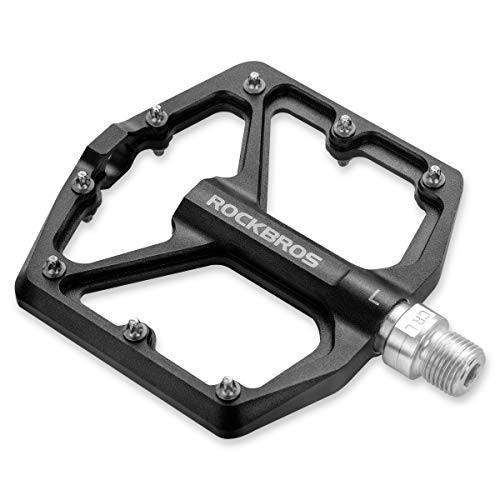 4. ROCKBROS Aluminum Flat Pedal (K203) — Best accessible flat platform | Check price on Amazon |
Key takeaways
- The best pedals for a hybrid bike compared: Shimano dual-sided SPD/flat pedals for mixed shoes, plus grippy flat platforms for sneakers, with a clear buying guide.
Affiliate Disclosure: We independently review everything we recommend. When you buy through our links, we may earn a commission. As an Amazon Associate we earn from qualifying purchases. Prices and availability change, so check the product page before you buy.
A hybrid bike lives two lives. One day it is a commuter, ridden in sneakers to a station, an office, or a shop, with frequent stops at lights. The next day it is a fitness bike, ridden for an hour on a path or quiet road, where a secure connection to the pedal makes the effort feel worthwhile. The stock pedals most hybrids ship with serve neither life especially well: they are usually small, slippery in the wet, and offer no option to clip in.
That is why the best pedals for a hybrid bike fall into two clear families. Dual-sided pedals have a clip-in mechanism on one side and a flat platform on the other, so the same pedal works in cycling shoes and in everyday shoes. Flat platform pedals have no clip at all, just a wide, grippy surface that works with any shoe and lets you put a foot down instantly. Neither family is better in the abstract. The right choice depends on which of your hybrid’s two lives matters more to you, and this guide covers strong options in both families.
The four pedals below are all the same type of product — bicycle pedals suitable for a hybrid bike — and they were chosen to cover the realistic hybrid use cases rather than to pad a list. Specifications are taken from manufacturer and product page information. We have not personally tested these pedals, and nothing here should be read as a claim that we have. Availability on Amazon US was checked for each model; where a live product page could not be fully read at the time of checking, that evidence level is noted honestly in our internal review notes, and you should confirm current stock on the product page itself before ordering.
Our top picks at a glance
For most hybrid riders, the Shimano PD-M324 is the classic starting point: a durable dual-sided pedal with an SPD clip on one side and a proper platform cage on the other. The Shimano PD-EH500 does the same job in a lighter, slimmer body with a pinned flat side, and suits riders who want the flat side to grip better in sneakers. If you know you will never clip in, the Race Face Chester gives you a wide composite flat platform with replaceable pins, and the ROCKBROS aluminum flat pedal gives you a broad alloy platform with sealed bearings at the accessible end of the market.
1. Shimano PD-M324 — Best for most hybrid riders
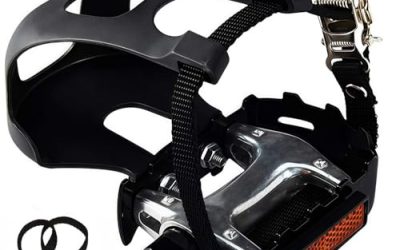
The PD-M324 has been the default recommendation for hybrid and commuter bikes for years, and the reason is simple: it does both jobs without fuss. One side carries a Shimano SPD clip-in mechanism for two-bolt cycling shoes. The other side is a flat platform surrounded by a metal cage, which works with trainers and everyday shoes and gives your foot something substantial to stand on.
Shimano lists the pedal with an aluminum body, adjustable cleat retention, a sealed mechanism, and serviceable cup-and-cone bearings, and the product page states a pair weight of about 533 grams. That makes it heavier than the PD-EH500 below, and weight is the main criticism leveled at it. On a hybrid bike used for commuting and fitness riding, that weight is rarely the deciding factor, because the pedal’s durability and the size of its platform matter more in daily use. A pair of SM-SH56 multi-release cleats is included, according to the product information, which matters for beginners: multi-release cleats let you unclip with a wider range of foot movements than single-release cleats, which is reassuring when you are learning at junctions.
Release tension is adjustable, so you can set it light while you build confidence and increase it later if you want a firmer hold. Start light. Almost every beginner who struggles with clipless pedals is struggling with tension set too high, not with the concept itself.
Choose the PD-M324 if you want one pedal that covers commuting in normal shoes and longer rides in cycling shoes, you value a large platform and a long service record over low weight, and you are new to clipping in and want the most forgiving learning setup. Look elsewhere if low weight is a priority, or if you want pins rather than a cage on the flat side for grip in wet conditions.
2. Shimano PD-EH500 — Best lighter dual-sided option with a pinned flat side
The PD-EH500 follows the same one-side-SPD, one-side-flat idea as the PD-M324, but in a slimmer and considerably lighter package. Shimano’s figures, as reported on product pages, put the pair at about 383 grams, and the flat side uses removable traction pins rather than a surrounding cage. Those pins make a real difference in sneakers, especially in the wet, because they bite into a soft sole instead of letting it skate across a smooth platform. The pins can be adjusted or replaced if they wear or if you want less aggressive grip.
The clip side uses the same SPD two-bolt system, with adjustable release tension and a light-action binding that suits riders who clip in and out frequently in traffic. Product information describes the PD-EH500 as intended for urban riding and mixed footwear use, which is exactly the hybrid brief. It is also the more modern-looking of the two Shimano options, with a black finish that suits newer hybrids better than the silver cage style of the M324.
The trade-offs are platform size and price positioning. The flat side is smaller than the M324’s caged platform, so riders with larger feet, or riders who spend most of their time on the flat side, may prefer the M324 or a dedicated flat pedal. And because the pins are a feature, check them periodically: a missing pin is easy to replace, but only if you notice it.
Choose the PD-EH500 if you split your riding between cycling shoes and sneakers, ride in the wet, and want the dual-sided idea in a lighter body. Choose the M324 instead if you want the biggest flat platform and the lowest-friction learning experience.
3. Race Face Chester — Best flat pedal if you never clip in
Not every hybrid rider wants to clip in, and for those riders a good flat pedal is not a compromise, it is the correct answer. The Chester is a composite platform pedal with a large surface, a concave shape that helps your foot settle into the center, and replaceable metal pins around the platform for grip. Race Face specifies a platform of about 110 by 101 millimeters, a chromoly steel axle, and sealed cartridge bearings, and the design has been widely used on mountain bikes, which is a demanding test for a pedal that will also see commuting duty.
On a hybrid, that mountain bike heritage translates into three practical benefits. The platform is big enough to support the whole forefoot, which reduces hot spots on longer rides in flexible shoes. The pins keep a trainer sole planted when you stand up on a climb or ride through rain. And the composite body shrugs off the knocks that pedals inevitably take against curbs, racks, and station barriers, without the sharp edges of a metal body.
There are two honest limitations. A flat pedal cannot pull up on the back of the pedal stroke the way a clipped-in shoe can, so if your fitness riding progresses toward structured training, you may eventually want a dual-sided pedal instead. And the pins that provide the grip can mark soft shoe soles and catch on shins if you slip, which is a familiar trade-off with every pinned flat pedal, not just this one. Wear shoes with a reasonably firm, flat sole for the best result.
Choose the Chester if all your riding is in everyday shoes or flat cycling shoes, you want maximum grip and an easy foot-down at every stop, and you have no plans to try clipless. It is also a sensible choice for riders returning to cycling who want confidence first and efficiency later.
4. ROCKBROS Aluminum Flat Pedal (K203) — Best accessible flat platform
The ROCKBROS K203 is an aluminum alloy flat pedal built around the features hybrid riders most often ask for at the accessible end of the market: a wide platform, anti-slip pins, sealed bearings, and a standard thread that fits the vast majority of hybrid bike cranks. The product page describes an aluminum body, a 9/16-inch spindle, and a lightweight platform design intended for road, mountain, and hybrid style bikes, sold as a pair.
For a hybrid used for commuting and leisure riding, that specification covers the essentials. The alloy body feels more substantial than the basic plastic pedals many hybrids ship with, the platform gives a trainer sole more support than a narrow stock pedal, and sealed bearings reduce the maintenance a commuter pedal needs through a wet season. As with any pinned pedal, check that the pins are present and tight when you fit the pedals, and expect to clean grit out of the platform in winter use.
Be realistic about what this pedal is. It is a flat-only pedal, so there is no clip-in option later without replacing it, and it does not carry the long model history of the Shimano and Race Face names above. Check the exact color and version on the product page before ordering, because this brand sells several similar-looking pedals under closely related listings, and confirm the thread size matches your cranks.
Choose the ROCKBROS K203 if you want to replace slippery stock pedals with a wide alloy platform, ride entirely in flat shoes, and prefer to spend modestly on a commuter upgrade. Choose the Chester instead if you want a larger platform and a more established design, and choose a Shimano dual-sided pedal if you think clipping in is in your future.
How to choose pedals for a hybrid bike
Start with the shoe question, because it decides the family. If you own, or realistically plan to buy, two-bolt cycling shoes, buy a dual-sided pedal. If every ride you do is in the shoes you walk in, buy a flat pedal and do not pay for a mechanism you will never use.
Next, check cleat compatibility if you are going dual-sided. Both Shimano pedals here use the SPD two-bolt system, which is the most widely supported recessed-cleat system for hybrid, touring, and mountain bike shoes. Recessed cleats matter for hybrid riders because you can walk in the shoes at a station or a cafe without skating on an exposed road cleat. Note that Crankbrothers dual-sided pedals, which are a popular alternative, use their own cleats rather than SPD, so cleats are not interchangeable between those systems even though both bolt to similar shoes.
Then check the thread. Almost all adult hybrid bikes use a 9/16-inch pedal thread, and all four pedals here are sold for that standard fitting, but confirm against your bike’s crank specification if your bike is unusual, older, or a children’s model adapted for an adult. Pedals are also handed: the left pedal has a reverse thread. Fit the pedal marked for each side, start both by hand to avoid cross-threading, and tighten with a pedal wrench or hex key as the pedal design requires.
Consider the flat side carefully if you are buying dual-sided. A caged platform, as on the PD-M324, is forgiving and works with almost any shoe. A pinned platform, as on the PD-EH500, grips better in the wet but can feel aggressive under thin soles. If most of your miles will be on the flat side, that difference may matter more to you than the clip mechanism.
Finally, think about maintenance. Sealed mechanisms and cartridge bearings reduce how often a commuter pedal needs attention. Adjustable pins and replaceable cleats extend the life of the parts that wear. A pedal is a small purchase that you interact with on every pedal stroke, so repairable beats disposable here.
Fitting and first-ride advice
Fitting new pedals is a short job. Remove the old pedals remembering that the left one loosens in the opposite direction to a normal thread, apply a small amount of grease to the new threads, thread each pedal in by hand on its correct side, then tighten firmly. If you are fitting cleats for the first time, position them under the ball of your foot, set the release tension to its lightest setting, and practice clipping in and out while holding a wall or a rail before your first ride in traffic. Practice on grass or a quiet path, and unclip early, well before each stop, until the movement is automatic.
Give any new pedal setup a few short rides before a long one. Check pin tightness on flat pedals after the first rides, check cleat bolts on clipless setups, and re-check pedal tightness after the first week. Small checks like these prevent almost all of the common new-pedal problems.
Frequently asked questions
Are dual-sided pedals worth it on a hybrid bike?
Yes, if you ride in two kinds of shoes. They remove the need to choose between a commuting pedal and a fitness pedal. If you only ever ride in one kind of shoe, a single-purpose pedal does that job better.
Can I ride the flat side of an SPD pedal in any shoes?
Broadly, yes. That is the point of the design. Trainers and flat shoes work well. Very smooth dress soles grip less well, especially in the wet, and pinned flat sides grip better than smooth ones.
Do these pedals fit every hybrid bike?
They fit the standard 9/16-inch thread used by almost all adult hybrids. Confirm your crank thread if your bike is non-standard, and always fit the left and right pedals on their correct sides.
Should a beginner start clipped in?
Start on the flat side or on flat pedals, then add clipping in with light tension and multi-release cleats once basic bike handling feels automatic. There is no prize for clipping in on day one.
How long should bike pedals last?
With basic cleaning and occasional bearing or pin attention, a quality pedal should last for years of commuting and fitness riding. Cleats wear faster than pedals and should be replaced when engagement starts to feel vague.
Bottom line
For a hybrid bike, buy the pedal that matches your shoes, not the pedal with the longest feature list. The Shimano PD-M324 is the safest all-round dual-sided choice and the friendliest way to learn clipless. The Shimano PD-EH500 gives you the same versatility in a lighter body with a grippier pinned flat side. The Race Face Chester is the flat pedal to choose for confident, clipped-out riding in any shoe, and the ROCKBROS K203 covers the same flat-only job in aluminum at the accessible end of the market. Whichever you choose, confirm the thread, the cleat system, and current availability on the product page, fit them carefully, and give yourself a few short rides to get used to the change.