Key takeaways
- Find the best satellite communicators for hiking, boating, and remote travel. Compare two-way messaging, SOS, battery life, and coverage before you buy.
- Top Pick: Garmin inReach Mini 3 Plus — Best Overall
- Runner-up: Garmin inReach Mini 2 — Best Standalone Value
- Also consider: ZOLEO Satellite Communicator — Best Value
Cell coverage ends where the road does. Hikers, boaters, and remote workers all reach places where a phone shows no bars, and that is exactly where a satellite communicator earns its keep. These pocket devices send and receive text messages through satellites, share a live location with family, and trigger an SOS that reaches a staffed rescue coordination center. They are not phones, and they are not a replacement for a personal locator beacon. They fill the gap between the two.
Every device here needs an active satellite subscription before it sends anything. The hardware is a one-time purchase and the plan is a monthly commitment, so the plan matters as much as the device. Some plans include a set number of messages, and some allow seasonal suspension.
As an Amazon Associate, we earn from qualifying purchases.
Quick Answer
The Garmin inReach Mini 3 Plus is the best satellite communicator for most people, with a color touchscreen, on-device texting, photo and voice messaging, and full GPS navigation in a pocket-sized body. If you want the longest battery life and the lowest Garmin buy-in, the Garmin inReach Messenger is the better pick. The ZOLEO is the best value for phone-first users.
1. Garmin inReach Mini 3 Plus — Best Overall

The Mini 3 Plus is Garmin’s newest small communicator, and it replaces the Mini 2 as the flagship of the pocket-sized line. Its headline feature is a 1.9-inch color touchscreen, a first for a device this small, which lets you compose and read messages on the device itself without reaching for a phone. It also adds photo sharing and 30-second voice messages over the faster Iridium data link.
Navigation is built in: an on-device GPS with a basemap, waypoints, and TracBack routing, which guides you back along the path you came in on. Battery life runs up to 350 hours with 10-minute tracking, or up to 95 hours in performance messaging mode, and the body is rated IP67 against dust and water. It weighs 4.42 ounces and measures 3.85 by 2.16 by 1.05 inches.
SOS is interactive. Pressing the SOS button opens a two-way exchange with Garmin Response, a staffed coordination center, so rescuers learn what happened and what help is needed before they move. That conversation is the difference between a blind alarm and a coordinated response.
The Mini 3 Plus is the most capable device here, and also the most expensive. Buyers who already carry a chartplotter or a full GPS may not need the on-device navigation.
2. Garmin inReach Mini 2 — Best Standalone Value

The Mini 2 was the best standalone satellite messenger from 2022 through 2025, and it remains the value pick for a compact communicator that works without a phone. Its 0.9-inch monochrome screen is small on purpose: sunlight-readable, simple, and easy to read at noon on an open ridge. The on-device GPS covers waypoints, TracBack routing, and live tracking, so the device stands alone without a phone.
At 3.5 ounces, it is the lightest unit in this guide, in a case measuring 2.04 by 3.90 by 1.03 inches. The battery is rated for up to 14 days in 10-minute tracking mode, and the body carries an IPX7 water rating. It rides the Iridium network, which covers the planet pole to pole.
The trade-off against the Mini 3 Plus is the screen and the messaging: no touchscreen, no photo sharing, no voice messaging. Texting on a small monochrome display with buttons is slower than tapping a color screen. For hikers who value light weight and a proven record over new features, that trade is easy to accept.
3. Garmin inReach Messenger — Best Battery Life
The Messenger is the cheapest way onto the Garmin Iridium system, and it holds the longest battery life in this guide: up to 28 days in 10-minute tracking mode. There is no on-device navigation and no screen for composing messages. A single physical SOS button and two LED indicators are the only controls on the body. Everything else runs through the Garmin Messenger app on a paired phone.
That phone-first design is a strength and a limit at the same time. Group messaging, location sharing, and weather forecasts all work through the app, and the device can reverse-charge a phone from its own battery. The flat-panel antenna is strong, the body is rated IPX7, and it weighs 4 ounces.
The limit is obvious: if the phone dies, breaks, or gets soaked, the Messenger can still send SOS and a check-in from the hardware button, but full two-way texting stops until the phone is back. For a vehicle kit, a boat bag, or a base-camp spare, the Messenger is hard to beat, because it sips power between trips.
Note the model name: Garmin also sells an inReach Messenger Plus with photo and voice messaging. This pick is the standard Messenger, model 010-02672-00.
4. ZOLEO Satellite Communicator — Best Value
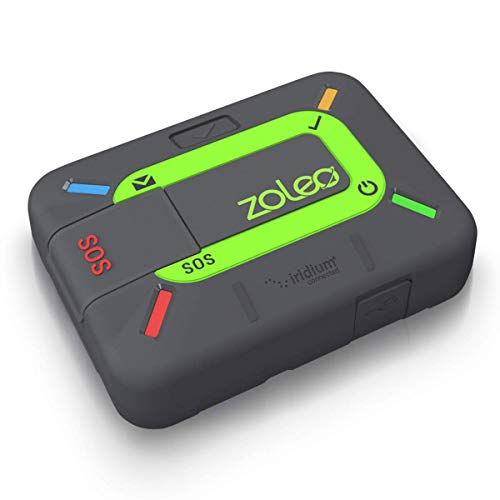
The ZOLEO is the budget path to two-way satellite messaging on the Iridium network, and it wins on the service side as much as the hardware. The device pairs with a phone over Bluetooth and routes messages through satellite, cellular, or Wi-Fi, always spending the cheapest network first. Back in cell coverage, messages ride the phone network instead of burning satellite credits.
Every ZOLEO account gets a dedicated SMS number and email address, so family can text you back at a permanent number. Check-in messages and SOS work from hardware buttons on the device, even if the phone is dead, and SOS routes to a staffed monitoring center around the clock. The battery lasts 200 hours or more, the body is rated IP68 against dust and water, and the device weighs 5.3 ounces.
The ZOLEO is a phone-first device, and that is its main limitation. Full messaging needs the free ZOLEO app on a smartphone, and there is no screen for reading messages on the device itself. The plan includes a low-cost suspension option for the off season, so you can keep your number while the device sits in a drawer between trips. For seasonal travelers, the ZOLEO is the smart buy.
5. SPOT X with Bluetooth — Best Built-In Keyboard
The SPOT X is the only device in this guide with a built-in physical QWERTY keyboard, and that single feature defines it. Every other communicator here either needs a paired phone or a small on-device screen to type a message. The SPOT X lets you type a full message on the device itself, with a backlit keyboard, and send it without touching a phone. It also carries its own dedicated phone number.
The device runs on the SPOT satellite network, which covers the lower and mid latitudes where most remote travel happens but thins out toward the poles. That is the real trade-off against the Iridium devices above. Across North America and the Caribbean, coverage is solid. If you plan polar travel or mid-ocean passages, an Iridium device is the safer choice. The SPOT X is rated IP67, weighs 7 ounces, and its battery lasts 240 hours in 10-minute tracking mode. Tracking can run as often as every 2.5 minutes.
SOS goes to the SPOT emergency response center. It also pairs with a phone over Bluetooth for app-based messaging. The SPOT X suits coastal boaters, pilots, and field workers who want to type real messages on hardware and have confirmed coverage in their area.
How to Choose
Check the network first. Iridium covers the whole planet, poles included, because its 66 satellites link to each other. The SPOT network covers most populated latitudes well but fades near the poles and in mid-ocean. If your travel takes you to high latitudes or open water, choose Iridium.
Next, decide how you want to type. A phone-paired device like the ZOLEO or the Messenger gives you a full keyboard through an app, but it depends on the phone. A standalone device like the Mini 2 or Mini 3 Plus lets you compose on the device, slowly on buttons or quickly on a touchscreen. The SPOT X splits the difference with a real keyboard built in.
Battery life decides how long you can stay out. The Messenger leads at up to 28 days, the Mini 3 Plus and Mini 2 follow at up to 350 hours and 14 days of tracking, and the ZOLEO and SPOT X sit at 200 hours or more.
Read the plan before you buy. Every device here needs an active subscription for messaging and SOS. Compare the included message count, the suspension terms for the off season, and the activation fee.
Finally, confirm the plan you activate includes SOS monitoring, and test the check-in function at home before the first trip.
Who Should Skip It
Skip a satellite communicator if your travel never leaves cell coverage. A phone, a car charger, and a paper map cover a road trip through populated country, and a satellite subscription adds cost without benefit.
Skip the phone-first devices if you travel alone in rough country and want messaging that survives a dead phone. The ZOLEO and the Messenger both need a working phone for full texting, so a solo traveler should choose the Mini 2, the Mini 3 Plus, or the SPOT X instead.
Skip the SPOT X if your route crosses polar regions or open ocean, where its network does not reach.
Skip any of these devices if you need voice calls. Satellite communicators send text, photos, and short voice notes, but they are not satellite phones. If you need live voice conversation from anywhere, a satellite phone is a different product class.
FAQ
Do satellite communicators work without a cell signal?
Yes. They send messages through satellites, not cell towers, so they work anywhere with a clear view of the sky. Trees, canyons, and heavy cloud can slow a message.
Do I need a subscription for SOS?
Yes, for every device in this guide. SOS monitoring is part of the service plan, and an inactive account cannot reach the coordination center. Personal locator beacons are the subscription-free alternative, but they send an SOS only.
Can family text me back on a satellite communicator?
Yes, with limits. The ZOLEO and SPOT X give you a dedicated number that contacts can text directly. Garmin devices receive replies through the Garmin Messenger app or a web portal, depending on the plan.
How long does the battery last on a multi-day trip?
It depends on the tracking interval and how often you message. The Messenger is rated for up to 28 days at 10-minute tracking, the Mini 2 for up to 14 days, and the ZOLEO and SPOT X for 200 hours or more.
Final Verdict
The Garmin inReach Mini 3 Plus is the best satellite communicator for most people: a color touchscreen, on-device texting, photo and voice messaging, and full GPS. The Garmin inReach Mini 2 is the value standalone for hikers who want a proven device at a lower cost. The Garmin inReach Messenger is the pick for the longest battery life, as long as you always carry a phone. The ZOLEO is the best value overall for phone-first users who want a dedicated number. The SPOT X is the pick for anyone who wants to type full messages on a real keyboard without a phone. Choose the network first, then the way you want to type, and confirm the plan fits your trips before you buy.