Key takeaways
- Compare the best 2TB SSDs for gaming, video editing, and everyday storage, with fast NVMe picks, a portable drive, and simple buying guidance for any machine.
The best 2TB SSDs give a computer room to breathe. Two terabytes holds a large game library, a growing photo and video collection, and the applications a household or a small studio uses every day, without the constant juggling that comes with a smaller drive. It suits a wide range of machines, from a gaming desktop to a laptop that needs a single-drive upgrade, and from a creator workstation to a portable setup that travels between locations.


The short answer is that most buyers should start with a fast PCIe 4.0 NVMe drive such as the Samsung 990 PRO 2TB or the WD_BLACK SN850X 2TB. Buyers on a tighter budget can look at the Crucial P3 Plus 2TB, while anyone who needs storage that moves between computers should consider the portable SanDisk Extreme Portable SSD 2TB. Owners of older machines with a 2.5-inch SATA bay have a separate answer in the Samsung 870 EVO 2TB. The right choice depends less on chasing the largest headline speed and more on matching the interface, form factor, and intended use to the machine.
Quick Picks
Our Short List of 3
All 5 Picks at a Glance
| Product | Specs | Action |
|---|---|---|
| Samsung 990 PRO 2TB (B0BHJJ9Y77) | Check price on Amazon | |
| WD_BLACK SN850X 2TB (B0B7CMZ3QH) | Check price on Amazon | |
 Crucial P3 Plus 2TB (B0B25ML2FH) | Check price on Amazon | |
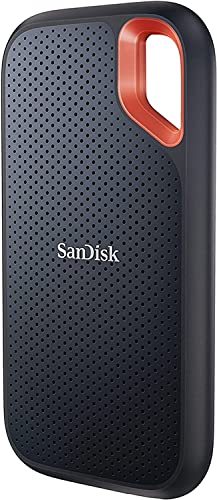 SanDisk Extreme Portable SSD 2TB (B08HN37XC1) | Check price on Amazon | |
 Samsung 870 EVO 2TB (B08QB93S6R) | Check price on Amazon |
How to Choose
Internal NVMe or Portable SSD
The first decision is where the drive will live. An internal NVMe SSD installs inside a desktop or laptop and becomes part of that machine, serving as a boot drive, a game drive, or a working drive for large projects. A portable SSD connects over USB-C and moves between computers, which suits photographers, students, and anyone who works on more than one machine. Portable drives are convenient, but the USB connection limits their top speeds well below those of a modern internal NVMe drive. Choose internal NVMe for the fastest experience inside one computer, and portable for files that must travel between machines.
PCIe Generation and Sequential Speed
Sequential read and write speeds describe how quickly a drive moves large, continuous files, such as copying a video folder or loading a large game. PCIe 4.0 NVMe drives in this guide list read speeds from 5,000 MB/s up to 7,450 MB/s, while a SATA drive tops out near 560 MB/s because the SATA interface itself sets the ceiling. The generation matters only when the computer supports it. A PCIe 4.0 drive will work in a PCIe 3.0 slot in most cases, but it will run at the lower speed of that slot. Before choosing a flagship drive, confirm the machine has a PCIe 4.0 M.2 slot. A PCIe 4.0 drive will work in a PCIe 3.0 slot, but only at the lower speed.
Form Factor and Physical Fit
Most modern internal NVMe drives use the M.2 2280 form factor, which means the drive is 22 millimetres wide and 80 millimetres long. That size fits most desktop motherboards and many laptops, but some thin laptops and handheld devices use shorter 2230 or 2242 slots, and those machines cannot accept a 2280 drive. Portable SSDs avoid this question entirely, since they connect through a cable. SATA drives use the older 2.5-inch form factor and need a SATA data cable and a power connection inside a desktop, or a 2.5-inch bay inside a laptop. Checking the manual and confirming the mounting screw is present takes a few minutes and prevents a return.
Capacity and How 2TB Gets Used
Two terabytes is a practical middle ground. It is large enough for an operating system, applications, and a library of games or media, yet it remains a single drive that is simple to manage. Gamers should think about the size of current titles. Video editors should think about active project files and scratch space, and keep finished archives on a separate drive where possible. Photographers should think about raw files and catalogues that grow with every shoot. A drive that is kept nearly full can also slow down, so leaving free space is a sensible habit.
Endurance and Warranty
Endurance is expressed in terabytes written, known as TBW, and it describes how much data can be written to the drive over its warranty period. A 2TB drive with 1,200 TBW suits heavy writing, such as frequent video exports, while a drive with a lower figure still suits ordinary use, gaming, and document work for many years. Most drives in this guide carry a five-year limited warranty, subject to the TBW limit. Buyers who write large amounts of data every day should weigh endurance more heavily. Buyers who mainly read data, load games, and open documents can focus on speed, fit, and capacity instead.
Cooling, Power, and Sustained Performance
Fast NVMe drives generate heat during long, heavy writes, and heat can cause a drive to reduce its speed to protect itself. Many motherboards include a heatsink over the M.2 slot, and some drives are sold with one attached. The bare drives in this guide rely on case airflow or a motherboard heatsink, so a compact case with limited airflow deserves extra attention. Laptops have less room for cooling, which makes a power-efficient drive a better match for a thin machine. Sustained performance also depends on the memory inside the drive. Drives that use QLC memory can slow during very long writes once their fast cache fills, while drives built for sustained workloads hold their pace for longer. For short bursts, such as loading a game, the difference is small. For moving hundreds of gigabytes at once, it becomes noticeable.
The Best 2TB SSDs Reviewed
Samsung 990 PRO 2TB (B0BHJJ9Y77)
The Samsung 990 PRO 2TB is the high-end pick in this guide. Samsung lists sequential read speeds up to 7,450 MB/s and sequential write speeds up to 6,900 MB/s over a PCIe 4.0 x4 NVMe interface, in the M.2 2280 form factor. The model number is MZ-V9P2T0B/AM, and this is the bare version without a factory heatsink. Samsung lists endurance of 1,200 TBW for the 2TB model, with a five-year limited warranty subject to that limit. Samsung Magician software is available for monitoring drive health and managing firmware.
This drive suits a gaming desktop, a creator workstation, or a high-end laptop with a PCIe 4.0 slot and adequate cooling. It handles large game libraries, 4K video work, and heavy multitasking, and its endurance figure gives it room for sustained writing. For a PlayStation 5 expansion, pair it with a suitable heatsink, since the console requires one and this bare version does not include it.
Skip this drive when the computer has only a PCIe 3.0 slot, or when the machine is a thin laptop with limited cooling. The 990 PRO is a flagship drive, and its strengths matter most when the system around it can use them.
WD_BLACK SN850X 2TB (B0B7CMZ3QH)
The WD_BLACK SN850X 2TB is a gaming-focused NVMe drive with listed sequential read speeds up to 7,300 MB/s and write speeds up to 6,300 MB/s. It uses a PCIe Gen4 interface in the M.2 2280 form factor, and the model number is WDS200T2X0E. Western Digital positions the SN850X as a game drive, and its speed and capacity suit a large library of installed titles alongside the operating system and applications.
This drive suits a gaming desktop with a PCIe 4.0 slot, where fast loading and ample room for games matter more than anything else. It also suits a creator who moves large files regularly. Console owners should check the console maker guidance on heatsinks before choosing this bare version, since a heatsink version is sold separately.
Skip this drive when the computer lacks a PCIe 4.0 M.2 slot, or when the build is a small-form-factor machine with limited cooling and no motherboard heatsink. Skip it for light document work and web browsing, where a mid-range NVMe drive covers the need.
Crucial P3 Plus 2TB (B0B25ML2FH)
The Crucial P3 Plus 2TB is the mainstream NVMe pick in this guide. Crucial lists sequential read speeds up to 5,000 MB/s over a PCIe Gen4 NVMe interface, in the M.2 2280 form factor. The model number is CT2000P3SSD8, and the drive is listed for laptop and desktop use. It uses QLC memory, which keeps the drive accessible while still delivering speeds far above any SATA drive. For everyday use, that combination is practical: boot times are quick, applications open promptly, and large files move faster than on an older drive.
This drive suits a laptop or desktop upgrade where the goal is a large jump in responsiveness without a flagship budget. It suits students, home offices, and general-purpose gaming machines, and it works well as a second drive for games and media. Its M.2 2280 size fits most modern machines.
Skip this drive for continuous large-file writing, such as regular exports of long video projects, because QLC-based drives can slow during extended writes once their cache fills. Skip it as well when the machine has only a SATA bay, since this NVMe drive needs an M.2 slot.
SanDisk Extreme Portable SSD 2TB (B08HN37XC1)
The SanDisk Extreme Portable SSD 2TB is the portable pick in this guide, and it is the only drive here that connects over a cable instead of installing inside a computer. SanDisk lists speeds up to 1,050 MB/s over USB-C with a USB 3.2 Gen 2 connection, and the model number is SDSSDE61-2T00-G25. The drive carries an IP65 rating for water and dust resistance, and it includes a carabiner loop for attaching it to a bag. Hardware encryption is available through SanDisk software.
This drive suits photographers, videographers, students, and anyone who moves files between computers. It works as a working drive for editing on a laptop, as a backup drive for a photo library, and as a way to carry a large project between home and a studio. Use the included USB-C cable and a port that supports the drive’s speed to get the most from it.
Skip this drive when the goal is the fastest storage inside a single computer, since a portable drive over USB cannot match an internal NVMe drive. Skip it as well when the computer has only older USB ports that limit transfer speed.
Samsung 870 EVO 2TB (B08QB93S6R)
The Samsung 870 EVO 2TB is the SATA pick in this guide, and it exists for machines that cannot take an NVMe drive. Samsung lists sequential read speeds up to 560 MB/s and write speeds up to 530 MB/s over the SATA III interface, in the 2.5-inch form factor. The model number is MZ-77E2T0B/AM. Samsung lists endurance of 2,400 TBW for the 2TB model, with a five-year limited warranty subject to that limit, and the drive supports AES 256-bit hardware encryption.
This drive suits an older desktop or laptop with a 2.5-inch SATA bay, where it replaces a hard drive and transforms how the machine feels in daily use. It also suits a second drive in a desktop that already has an NVMe boot drive, and a home server where SATA capacity matters more than NVMe speed.
Skip this drive when the computer has a free M.2 NVMe slot, because an NVMe drive will be far faster for the same capacity. For the many older machines that still rely on SATA, the 870 EVO remains a sensible upgrade.
What to Check Before You Buy
Start with the machine, not the drive. Confirm whether it has an M.2 NVMe slot, a 2.5-inch SATA bay, or neither, and confirm the form factor that slot accepts. A 2280 drive does not fit a 2230 slot, and an NVMe drive does not fit a SATA-only bay. Check the manual for the PCIe generation of each M.2 slot, because a secondary slot sometimes runs at a lower speed than the primary slot.
Next, confirm the capacity in the listing before ordering. Every drive in this guide is sold in several capacities, and listings can show a different capacity as the default choice. The model number and the capacity line on the product page are the reliable checks: MZ-V9P2T0B/AM for the 990 PRO 2TB, WDS200T2X0E for the SN850X 2TB, CT2000P3SSD8 for the P3 Plus 2TB, SDSSDE61-2T00-G25 for the SanDisk portable 2TB, and MZ-77E2T0B/AM for the 870 EVO 2TB.
Think about cloning and installation before the drive arrives. Moving an operating system usually needs cloning software and, for a laptop with a single slot, a USB adapter or an external enclosure. Back up important data before any drive swap, and keep a backup after installation, since a single drive is not a backup strategy on its own.
Finally, check the seller and the return terms, and keep the packaging until the system recognises the full capacity. A drive that shows less capacity than expected, or that the system does not detect, usually points to a seating problem, a BIOS setting, or a slot that needs enabling. Reseating the drive and checking the BIOS resolves most of these cases.
FAQ
Is 2TB enough for gaming?
For most gamers, 2TB is a comfortable capacity. It holds the operating system, applications, and a library of installed games, including several large titles, without frequent uninstalls. Gamers who keep many large titles installed, or who record gameplay footage on the same drive, may still fill it over time. A second drive for recordings keeps the main drive free for games.
Can a 2TB NVMe SSD work in a laptop?
It can work when the laptop has a compatible M.2 slot. Most modern laptops with an M.2 2280 slot accept a 2TB NVMe drive, but thin laptops sometimes use a shorter slot or solder the storage in place, which prevents an upgrade. Check the manual for the slot size, the PCIe generation, and the maximum supported capacity before ordering. A portable SSD is the fallback when internal storage cannot be changed.
What is the difference between NVMe and SATA SSDs?
NVMe drives connect through the PCIe interface and reach speeds far above SATA drives, with the fastest models in this guide listing read speeds above 7,000 MB/s. SATA drives connect through the older SATA interface and top out near 560 MB/s. Both feel far faster than a hard drive in everyday use, but NVMe drives load large games and move large files more quickly. The choice depends on the slots the computer has.
Do I need a heatsink for a 2TB NVMe SSD?
A heatsink helps during long, heavy writes by keeping the drive cooler, which lets it hold its speed for longer. Many motherboards include a heatsink over the primary M.2 slot, and some drives are sold with one attached. The bare drives in this guide rely on case airflow or a motherboard heatsink. For a console expansion, a heatsink is a requirement, so check the console maker guidance before choosing a bare drive.
How long will a 2TB SSD last?
A 2TB SSD can last for many years under ordinary use, and most drives in this guide carry a five-year limited warranty subject to an endurance limit expressed in terabytes written. Light use writes far less data than heavy video work, so endurance is rarely the limiting factor for a home user. Keeping a backup matters more than the endurance figure, since any drive can fail without warning.
Bottom Line
The best 2TB SSDs cover a wide range of needs, and the right pick follows the machine it will serve. The Samsung 990 PRO 2TB is the strongest choice for a high-end desktop or workstation with a PCIe 4.0 slot and good cooling. The WD_BLACK SN850X 2TB is a close alternative for a gaming build. The Crucial P3 Plus 2TB is the sensible pick for an everyday upgrade. The SanDisk Extreme Portable SSD 2TB is the pick for storage that travels between computers. The Samsung 870 EVO 2TB is the pick for an older machine that still relies on SATA. Confirm the slot, the form factor, and the model number, leave free space on the drive, and keep a backup of anything that matters.
Disclosure: As an Amazon Associate, we may earn from qualifying purchases.