Key takeaways
- Compare large console humidifiers for indoor plant rooms: evaporative models with big tanks, humidistats and steady humidity for tropical foliage.
As an Amazon Associate we earn from qualifying purchases
A room full of tropical plants drinks moisture from the air all day, and a small desktop humidifier cannot keep up: its tank empties in hours and the humidity crashes between refills. The best console humidifiers for indoor plant rooms solve that with floor-standing cabinets, multi-gallon reservoirs and built-in humidistats that hold a steady level around the clock. This guide explains how to size and choose one, then compares four large evaporative consoles from AIRCARE and Vornado that suit plant rooms of different sizes and routines.
Quick Picks
| Product | Best for | Key spec |
|---|---|---|
| AIRCARE MA1201 | Most plant rooms | 3.6 gal bottle, up to 3,600 sq ft, digital humidistat |
| AIRCARE Space Saver 831000 | Longest gaps between refills | 6 gal reservoir, up to 70 hours of run time |
| AIRCARE H12600 Alliance | Biggest collections and sunrooms | 5.4 gal capacity, up to 3,700 sq ft coverage |
| Vornado Evap40 | One modest plant room | Dual 2 gal tanks, up to 1,000 sq ft, Vortex circulation |
How to Choose a Console Humidifier for Indoor Plant Rooms
Evaporative vs ultrasonic, and why it matters for leaves
Ultrasonic humidifiers push water into the air as a fine visible mist, and whatever minerals are dissolved in that water travel with it. When the droplets evaporate mid-air or settle, they leave a pale mineral film often called white dust. On furniture it is a nuisance; on plant leaves it coats the surface, dulls the foliage and can interfere with the leaf’s gas exchange over time. Evaporative consoles work differently: a fan draws room air through a water-soaked wick, and only water vapour leaves the unit. The minerals stay trapped in the wick, so the air gains humidity without dust landing on your plants. Evaporative output is also self-limiting, because saturated air absorbs less moisture from the wick, which makes it harder to overshoot into dripping, mould-friendly conditions. That is why every pick in this guide is an evaporative console.
Tank size and refill intervals
Console humidifiers hold several gallons instead of the litre or so of a tabletop unit, and that capacity sets your refill rhythm. A plant room in a heated house can pull multiple gallons of water into the air per day in winter, so a 3.6 gallon bottle may need topping up daily at high output, while a 6 gallon reservoir stretches the interval to every couple of days. Match the tank to your routine: if you water plants daily anyway, a mid-size tank is fine; if the plant room is checked twice a week, prioritise the largest reservoir and the longest stated run time. Also consider how the unit fills. A removable bottle you carry to a sink is easy to scrub, while a pour-in reservoir avoids lifting a heavy full bottle but is harder to deep-clean.
Humidistat control and humidity consistency
Plants do best with steady humidity rather than swings between dry mornings and soggy evenings. A built-in humidistat works like a thermostat: you set a target, commonly in the 50 to 60 percent range for tropical foliage, and the fan cycles or adjusts to hold it. Digital humidistats on the AIRCARE consoles display the current room reading and the set point, while the Evap40 uses a dial. Whatever the interface, place a small standalone hygrometer among the plants as a cross-check, because the sensor inside the unit reads the air right next to a moisture source and can run optimistic. Consistency also depends on output headroom: a console rated well above your room size can hold the target on a low, quiet fan speed instead of straining at maximum.
Coverage ratings and placement
Manufacturer coverage figures assume a fairly tight, well-sealed space, and a plant room with grow lights, heating vents or a frequently opened door will behave like a larger area. Treat the square-foot rating as a ceiling rather than a promise, and size up when in doubt. Placement matters as much as power: put the console on a level floor with clearance around its intake and outlet, near the centre of the collection rather than in a far corner, and not blowing directly onto foliage, which can keep leaves damp in one spot while the rest of the room stays dry. A unit on casters is easier to nudge into the best position as the collection changes.
Wicks, water quality and upkeep
The wick is the working part of an evaporative console and its main consumable. It draws water up from the reservoir and presents a large wet surface to the airflow; over weeks it accumulates the minerals the water leaves behind, gradually hardening and losing absorbency. When output falls or the wick looks stiff and discoloured, it is time to replace it. Tap water is acceptable in these units precisely because the wick catches the minerals, but harder water shortens wick life. A weekly rinse of the reservoir and a check for slime or odour keep the system healthy for both the machine and the plants breathing the output.
The Console Humidifiers Compared
AIRCARE MA1201

The MA1201 is AIRCARE’s classic console and the most straightforward fit for a dedicated plant room. It is an evaporative unit with a 3.6 gallon easy-fill bottle, digital controls and an adjustable humidistat, rated by the manufacturer for spaces up to 3,600 square feet with output of up to 12 gallons per day and run time of up to 36 hours per fill. Four fan speeds plus an automatic mode let it idle quietly once the room reaches the target and ramp up after you open a door or mist the plants. It rolls on casters, has a refill indicator and a check-filter light, and uses a single MAF1 Super Wick.
- Strength: Strong output headroom for its size, so it holds a set humidity on lower, quieter fan speeds; the removable bottle is simple to fill and scrub at a sink.
- Trade-off: At high demand the 3.6 gallon bottle needs daily attention in mid-winter, and the highest fan speed is noticeably louder than the lower settings.
- Skip it if your plant room goes several days between visits; the Space Saver below carries far more water.
AIRCARE Space Saver 831000
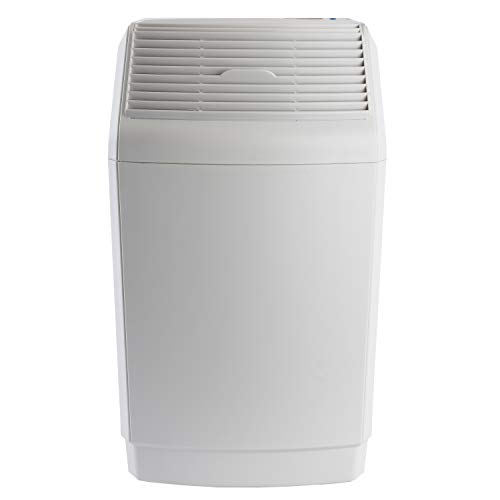
The 831000 Space Saver is built around refill avoidance. Its pour-in reservoir holds 6 gallons, the largest capacity in this guide, and AIRCARE rates it for up to 2,700 square feet and up to 70 hours of continuous run time. Digital controls, an automatic humidistat and automatic shut-off manage output across three fan speeds, and the cabinet is only about 13 inches wide, so it tucks against a wall or between shelving units in a crowded plant room. It uses the 1043 Super Wick, with the first one included.
- Strength: The 6 gallon reservoir and long run time mean the fewest refills of any pick here, which suits collectors who travel or check the room infrequently.
- Trade-off: You pour water into the unit rather than carrying a bottle to the tap, so refilling means bringing water to the machine, and the fixed reservoir is more awkward to deep-clean.
- Skip it if you prefer a lift-out tank you can scrub in a sink; the MA1201 or Evap40 fill more conventionally.
AIRCARE H12600 Alliance

The H12600, from AIRCARE’s Alliance line, is the heavy lifter for large plant rooms, sunrooms and greenhouse-style spaces. It carries a 5.4 gallon capacity, delivers up to 12 gallons of moisture per day and is rated for coverage up to 3,700 square feet, the widest figure in this guide. Digital console controls with an automatic humidistat keep that output in check, so the extra capacity translates into steadier humidity across a big, plant-dense room rather than localised dampness near the unit.
- Strength: The highest coverage rating here paired with a large reservoir, giving big collections even humidity without running the fan flat out.
- Trade-off: It is a substantial floor cabinet that claims real floor space, and its output is more than a single small room can usefully absorb.
- Skip it if your plant room is a single modest bedroom-sized space; the Evap40 covers that with a smaller footprint.
Vornado Evap40
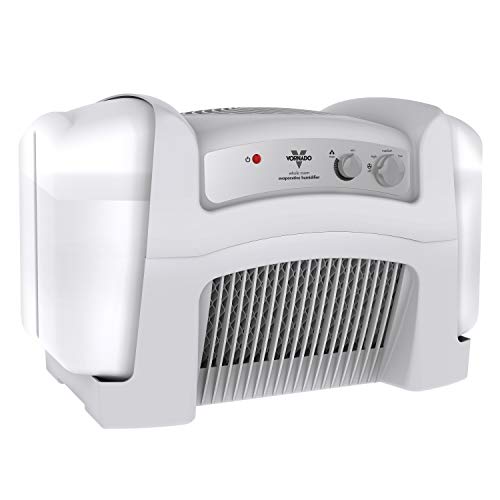
The Evap40 is the compact end of the console class: a 4 gallon evaporative unit split across two removable 2 gallon tanks, rated for rooms up to 1,000 square feet. Vornado’s Vortex circulation is designed to move humidified air around the whole room rather than pooling it above the unit, which helps a single row of shelves or a corner jungle share the moisture. It offers three fan speeds and an adjustable humidistat dial, and produces up to 4 gallons of output per day when run continuously on high. Two wick filters handle the evaporation.
- Strength: Twin lift-out tanks are light to carry and easy to clean, and the room-circulation design evens out humidity across a single plant room.
- Trade-off: The 1,000 square foot rating is the smallest here, so it cannot hold humidity in a large or open-plan growing space, and the analogue dial gives less precise set points than digital controls.
- Skip it if your collection fills a sunroom or spans several connected rooms; step up to one of the AIRCARE consoles.
Which One Fits Your Situation
A dedicated plant room you tend daily
Choose the AIRCARE MA1201. Its output headroom, digital humidistat and four fan speeds hold a target level precisely, and the daily refill rhythm matches a daily watering and inspection routine.
A collection that must survive long weekends and trips
Choose the AIRCARE Space Saver 831000. The 6 gallon reservoir and up to 70 hours of run time keep humidity stable while nobody is home to refill, and its narrow cabinet fits between storage and shelving.
A sunroom or large room packed with tropicals
Choose the AIRCARE H12600 Alliance. The 3,700 square foot rating and 12 gallon daily output give it the reserve to humidify a big, leaky, plant-dense space evenly.
One bedroom-sized plant room or a rental corner jungle
Choose the Vornado Evap40. Its dual tanks, modest footprint and circulation-focused airflow suit a single room, and the tanks lift out easily if you need to move the unit between rooms seasonally.
A home with very hard water
Any of the four works, because evaporative wicks trap minerals instead of dusting leaves with them, but budget for more frequent wick changes and favour the MA1201 or Space Saver for their widely available replacement wicks.
Common Mistakes
- Buying a small ultrasonic unit for a plant room and ending up with mineral dust filmed across the leaves and a tank that empties twice a day.
- Sizing the console exactly to the room’s floor area, ignoring open doors, heating vents and grow-light heat that make the space behave larger.
- Trusting the built-in humidistat reading without a separate hygrometer placed among the plants.
- Parking the humidifier so its outlet blows directly onto foliage, leaving one plant damp and the far shelves dry.
- Running a wick long past its prime; a mineral-hardened wick quietly cuts output and makes the room’s humidity sag.
- Setting the target above 60 percent for long stretches, which invites mould on soil surfaces, walls and window frames.
FAQ
What humidity level should a console humidifier hold for indoor plants?
Most tropical houseplants are comfortable around 50 to 60 percent relative humidity. Many common foliage plants tolerate the mid-40s, while humidity-loving species such as calatheas and many ferns prefer the upper part of that range. Pick a target inside it and let the humidistat hold steady rather than chasing daily adjustments.
Why choose evaporative over ultrasonic for a plant room?
An ultrasonic unit aerosolises the water along with its dissolved minerals, which settle as white dust on leaves and surfaces. An evaporative console releases pure water vapour and traps minerals in its wick, so foliage stays clean. Evaporative output also tapers naturally as the air saturates, reducing the risk of over-humidifying.
How often will I refill a console humidifier in a plant room?
It depends on tank size, fan speed and how dry the house air is. In heating season a hard-working console can use several gallons a day: expect roughly daily refills from the MA1201’s 3.6 gallon bottle at high demand, and every two to three days from the Space Saver’s 6 gallon reservoir at moderate settings.
Can I use tap water in these humidifiers?
Yes. Evaporative consoles are designed for tap water because the wick captures the mineral content instead of releasing it. Hard water will load the wick with scale faster, so check it more often and replace it when it stiffens or output drops.
Where should the humidifier sit in a plant room?
On a level floor near the middle of the collection, with space around the intake and outlet grilles, away from direct contact with leaves. Central placement and unobstructed airflow let the humidity equalise across all the shelves instead of concentrating beside the unit.