Key takeaways
- Cut MDF without chipped or fuzzy edges. Compare four 10-inch table saw blades built for clean MDF cuts, and pick the tooth count and grind for your saw.
MDF looks easy to cut until the edge tells the truth. The dense, glue-bound fibers chip, fuzz, and burn when the wrong blade passes through them, and a ragged edge on a cabinet door or shelf shows through paint no matter how carefully you sand it. Choosing a blade for MDF is therefore a decision about edge quality first and cutting speed second, because a fast cut that leaves a fuzzy face costs more time in sanding than it saves at the saw.
This guide is for home woodworkers building cabinets and shelves from MDF, for shop owners cutting melamine-faced panels all day, and for anyone replacing a dull general-purpose blade before a project where the cut edge will stay visible. The four blades below were picked from the names and listed details on their Amazon product pages, so you can check each model and code before ordering. All four are 10-inch blades with a standard 5/8-inch arbor, and each one suits a different kind of MDF work.
Quick Picks
As an Amazon Associate we earn from qualifying purchases
| Product | Best for | Key spec from title |
|---|---|---|
| Diablo D1060X | Mixed MDF rips and crosscuts | 10-inch, 60 Hi-ATB teeth, 0.098-inch kerf |
| Freud LU80R010 | Visible edges on cabinets and shelves | 10-inch, 80 TCG teeth, 0.126-inch kerf |
| DEWALT DW3106P5 | Finish blade plus a rough-sizing spare in one pack | 10-inch, 60-tooth and 32-tooth combo, thin kerf |
| Forrest WW10407125 | One premium resharpenable blade for daily MDF work | 10-inch, 40 ATB teeth, 0.125-inch full kerf |
How to Choose
Tooth Count and Grind
Tooth count decides how the cut face looks. A 60-tooth blade with a Hi-ATB grind shears the fibers at alternating angles, which leaves a smooth face on MDF crosscuts while still clearing waste fast enough for rips. An 80-tooth blade takes smaller bites, so each tooth removes less material and the edge comes out cleaner, which matters when the edge will stay visible under paint or edge banding. Grind matters as much as count: a TCG grind scores the surface with a chamfered tooth before the flat raker tooth follows, and that scoring pass is what stops the face from chipping on coated panels. Match the grind to the job, not just the tooth count on the box.
Kerf Width
Kerf is the width of the slot the blade cuts, and it decides how hard the saw works. A thin kerf blade around 0.098 inch removes less material with every pass, so a portable or lower-power table saw holds its speed through thick MDF instead of bogging down and burning the edge. A full kerf blade around 0.126 inch removes more material but runs steadier, because the thicker plate resists flexing on long rips and stays true when the sheet pushes sideways against the fence. Thin kerf suits smaller saws and sheet work; full kerf suits cabinet saws and long, straight rips where a wandering blade would spoil a panel. Pick the kerf your saw can drive without strain.
Hook Angle
Hook angle is the tilt of the tooth face, and it decides how aggressively the blade pulls material into the cut. A positive hook angle feeds fast, but on MDF it can grab the dense sheet and chip the top face as the tooth exits. A negative hook angle, such as minus 3 degrees, pushes the tooth into the cut more gently and scores the surface before shearing it, which keeps coated faces and MDF edges intact. The trade-off is feed speed: a negative hook blade needs a slower push, and forcing it burns the edge instead of chipping it. Choose positive hook for speed on rough sizing and negative hook when the face must stay clean.
Arbor, Diameter, and Plate
Every blade in this guide is a 10-inch blade with a 5/8-inch arbor, which fits most table saws sold today, but check both numbers on your saw before ordering. A blade too large will not fit under the guard, and an arbor that is too small leaves the blade loose on the shaft, which is unsafe at full speed. Plate thickness matters too: a thicker plate stays flat under load, while a thin plate relies on laser-cut stabilizer vents to damp vibration and keep the cut straight. A non-stick coating also helps with MDF, because the glue and resin in the fibers build up on bare steel and drag the cut. Confirm diameter, arbor, and plate before you buy.
The 4 Best Options
Diablo D1060X 10-Inch 60-Tooth Fine Finish Saw Blade

The D1060X is the one-blade answer for a shop that cuts MDF in mixed ways. Its 60 Hi-ATB teeth shear fibers cleanly for crosscuts that need little sanding, while the thin 0.098-inch kerf keeps the feed light on portable saws and lets the blade move through full sheets without bogging. TiCo carbide holds its edge through abrasive MDF glue and resin far longer than standard carbide, and the Perma-Shield coating resists the sticky buildup that drags a bare blade. Laser-cut stabilizer vents damp vibration, so the cut stays straight on long panels. It is the blade to fit when one blade must handle rips, crosscuts, and trimming.
Specs
- 10-inch diameter
- 60 Hi-ATB teeth
- 0.098-inch super thin kerf
- 5/8-inch arbor
- TiCo Hi-Density carbide teeth
- Perma-Shield non-stick coating
- Laser-cut stabilizer vents
- Fits miter saws and table saws
Best for: Mixed MDF rips and crosscuts on a portable or jobsite table saw.
Watch out for: The thin kerf plate can flex on long rips in thick stock, so keep the fence aligned and feed at a steady pace.
Freud LU80R010 10-Inch 80-Tooth Ultimate Plywood and Melamine Saw Blade

The LU80R010 is built for the exact problem MDF presents: a dense face that chips when a tooth exits too aggressively. Its 80 teeth use a TCG grind, so a chamfered tooth scores the surface first and the flat raker tooth follows to clear the cut, leaving an edge that needs almost no sanding before paint or edge banding. The minus 3 degree hook angle keeps the cut gentle on coated faces, and the full 0.126-inch kerf runs steady through long rips without wandering. It is an industrial blade from the Freud line, made for plywood and melamine, and those materials chip exactly the way MDF does.
Specs
- 10-inch diameter
- 80 teeth, TCG grind
- 0.126-inch kerf
- 5/8-inch arbor
- Minus 3 degree hook angle
- Freud industrial line for plywood and melamine
Best for: Cabinet doors and shelves where the cut edge stays visible.
Watch out for: The listing sometimes shows part number FRE-D1080X, so confirm model LU80R010 and ASIN B0007WKBEQ before ordering, and do not buy Diablo D1080X by mistake.
DEWALT DW3106P5 10-Inch 60-Tooth and 32-Tooth Saw Blade Combo Pack

The DW3106P5 is a two-blade pack built around the same idea as the Diablo: a 60-tooth fine-finish blade for clean MDF crosscuts, plus a 32-tooth general-purpose blade for rough sizing and rips. Fit the 60-tooth blade when the edge will show, and keep the 32-tooth blade on the saw for breaking down sheets before the finish pass. Both blades are 10 inches with a 5/8-inch arbor and thin kerfs, so a portable saw keeps its speed through thick MDF. Tungsten carbide teeth and a computer-balanced plate keep the cut true, and the pack covers two jobs for one purchase.
Specs
- 10-inch diameter, 2-blade combo pack
- 60-tooth fine-finish blade and 32-tooth general-purpose blade
- ATB tooth design
- Thin kerf
- 5/8-inch arbor
- Tungsten carbide teeth
- Computer-balanced plate
Best for: Shops that want a finish blade and a rough-sizing blade in one purchase.
Watch out for: The pack holds two different blades, so check the tooth count stamped on the blade before fitting it: the 60-tooth blade is the one for clean MDF edges, and the 32-tooth blade leaves a rougher face.
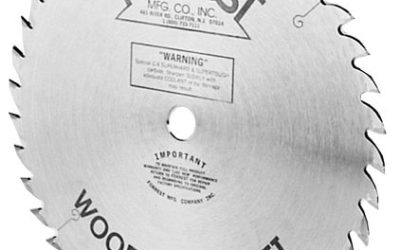
Forrest WW10407125 Woodworker II 10-Inch 40-Tooth ATB Saw Blade

The Woodworker II is the premium pick in this guide, a hand-tensioned American-made blade that furniture makers have fitted for decades. Its 40 ATB teeth use large C4 carbide tips, and the full 0.125-inch kerf runs dead straight through MDF without the flex a thin plate can show on long rips. The cut it leaves on MDF is smooth enough that many edges need no sanding before paint, and the blade can be resharpened again and again instead of thrown away. It costs more than the other blades here, and it earns that place on a cabinet saw that cuts MDF every day.
Specs
- 10-inch diameter
- 40 ATB teeth
- 0.125-inch full kerf
- 5/8-inch arbor
- C4 carbide teeth
- Hand-tensioned steel plate
- Made in USA
Best for: Furniture makers and cabinet shops that want one resharpenable blade for MDF and solid wood.
Watch out for: The full kerf needs a saw with enough power to drive it, so it suits a cabinet saw better than a small portable saw, and the 40-tooth count leaves a slightly rougher face than an 80-tooth blade on the most visible edges.
Which One Fits Your Situation
Your cabinet edges will stay visible
Pick the Freud LU80R010. Its 80 TCG teeth and negative hook angle leave edges that need almost no sanding before paint or edge banding, which is what cabinet doors and open shelves demand. The full kerf keeps long rips straight, so a shelf edge comes off the saw ready for finishing. Use the Diablo only if the same blade must also rip framing stock, where the finer finish matters less.
One blade must do everything in the shop
Pick the Diablo D1060X. Its 60 Hi-ATB teeth handle rips, crosscuts, and trimming without a blade change, and the thin kerf keeps the feed light on a portable saw. The edge it leaves is smooth enough for most MDF work, and a quick pass with fine grit finishes the few edges that will show. The Forrest Woodworker II is the dearer one-blade alternative, built to be resharpened for years on a cabinet saw.
You cut melamine-faced MDF panels all day
Pick the Freud LU80R010. Melamine faces chip exactly the way MDF edges do, and the TCG grind with its scoring tooth is made for that problem. The negative hook angle keeps the coated face intact on both sides of the cut, so panels come off the saw ready for edge banding without touch-up work. Feed steadily and let the 80 teeth do the work instead of pushing the sheet through.
Your saw is portable or lower powered
Pick the Diablo D1060X. Its thin 0.098-inch kerf removes less material with every pass, so a smaller saw holds speed through thick MDF instead of bogging down and burning the edge. The 60-tooth count is a fair balance between finish and feed, and the Perma-Shield coating keeps glue buildup from dragging the cut. The DEWALT DW3106P5 is a thin-kerf option, with a spare 32-tooth blade for rough sizing. Save the full kerf Freud and Forrest for a cabinet saw.
Common Mistakes
- Using a low-tooth rip blade on MDF and expecting a paint-ready edge: the wide gullets tear fibers instead of shearing them, so the face comes out fuzzy and needs heavy sanding.
- Feeding the sheet too fast through dense MDF: the teeth take too big a bite, the face chips, and the blade dulls sooner than it should.
- Letting glue and resin build up on the teeth: MDF is loaded with adhesive, and a gummed blade drags, burns, and cuts a wandering line.
- Ordering a blade without checking the arbor: most table saws take a 5/8-inch arbor, but a blade with the wrong bore will not mount safely.
- Buying Diablo D1080X when you meant Freud LU80R010: the LU80R010 listing sometimes shows part number FRE-D1080X, so confirm the model and ASIN before ordering.
Frequently Asked Questions
How many teeth should a table saw blade for MDF have?
Sixty to eighty teeth covers nearly all MDF work. A 60-tooth blade suits mixed rips and crosscuts, because it clears waste fast while still leaving a smooth face. An 80-tooth blade suits visible edges, because each tooth takes a smaller bite and the cut face needs less sanding. Below 50 teeth, a cheap rip blade leaves a fuzzy edge, though a premium 40-tooth blade can still cut MDF cleanly.
Can I use a regular combination blade on MDF?
Yes, for rough sizing and cuts that will stay hidden. A 50-tooth combination blade rips and crosscuts MDF without complaint, and its edge is fine for parts that sit inside a cabinet. For any edge that stays visible, switch to a 60-tooth fine finish blade or an 80-tooth TCG blade, because the combination blade leaves a face that needs sanding before paint or edge banding will sit flat.
Why does MDF burn when I cut it?
MDF burns when the blade rubs instead of cutting. The usual causes are a dull blade, a feed that is too slow, or too many teeth for a rip cut, all of which let friction build heat in the dense, glue-bound fibers. A sharp blade, a steady feed, and the right tooth count will stop most burning. Clean the teeth too, because resin buildup drags the blade and adds heat.
Does kerf width matter when cutting MDF?
Yes, because kerf decides how hard the saw works. A thin kerf near 0.098 inch suits portable and lower-power saws, since it removes less material and holds speed through thick sheets. A full kerf near 0.126 inch suits cabinet saws, since the thicker plate runs steadier on long rips. Match the kerf to your saw, and never force a full kerf blade through a saw that strains.