Key takeaways
- Find the best weed killers for South African lawns, with fast action, lawn-safe formulas and lasting control for common weeds at home, every day.
South African lawns work hard all year. Kikuyu, couch and buffalo grass spread fast in warm weather, and the same conditions invite dandelion, white clover, crabgrass, oxalis and plantain. A patch of weeds can take over a lawn in a single season if it is left alone, and hand pulling rarely keeps up once the roots are set. A selective weed killer solves the mismatch: it attacks the weeds and leaves listed lawn grasses standing, so the lawn can fill in the gaps on its own.
The five products below all kill weeds on lawns, and every one of them is a selective formula made for home lawns. Four are liquids for spraying and one is a granular weed-and-feed for broadcast spreading. Each one names the weeds it controls and the grass types it suits, so the right pick depends on your lawn, your weeds and the size of the job.
Quick Picks
As an Amazon Associate we earn from qualifying purchases
| Product | Best for | Key spec |
|---|---|---|
| Spectracide Weed Stop for Lawns Concentrate | Fast visible results on broadleaf weeds | 40 fl oz concentrate |
| Southern Ag Amine 2,4-D Weed Killer | Large lawns on a tight budget | 32 oz quart concentrate |
| Ortho WeedClear Lawn Weed Killer Ready-to-Use | Simple spot work with no mixing | 1 gal ready-to-use jug |
| BioAdvanced All-in-One Lawn Weed and Crabgrass Killer | Broadleaf weeds plus crabgrass | 32 oz ready-to-spray bottle |
| Scotts Turf Builder Weed and Feed 3 | Feeding the lawn while killing weeds | Covers 5,000 sq ft |
How to Choose
Match the Formula to Your Grass Type
Every selective weed killer on this list names the grass types it suits, and that list is the first thing to check. Kikuyu and couch handle most of these formulas well, while buffalo and LM grass can be more sensitive, so a product that suits one lawn may scorch another. Read the label for your exact grass before you buy, and look for the grasses the label excludes as well as the ones it allows. St. Augustine Floratam, bentgrass, carpetgrass and dichondra appear on several do-not-use lists here. When the label is silent about your grass, pick a different product rather than gambling on the lawn.
Spot Spray or Broadcast Coverage
How the weeds are spread across your lawn decides the format. A few dandelions near the path call for a ready-to-use trigger bottle or a small jug, where you can aim at each weed and leave the rest of the lawn untouched. Weeds spread across the whole lawn call for a concentrate mixed in a tank sprayer or a hose-end bottle, or a granular product spread with a rotary spreader. Concentrates cover far more ground for the same bottle size, and that matters on a large kikuyu lawn. Match the format to the job, not the other way around.
Weed Range: Broadleaf, Crabgrass, or Both
Most lawn weeds fall into two groups, and many products only handle one. Broadleaf weeds such as dandelion, white clover, plantain and oxalis answer to formulas built on 2,4-D and dicamba, while crabgrass and other grassy weeds need quinclorac or sulfentrazone in the mix. A lawn with only broadleaf weeds does fine with a plain broadleaf formula, and there is no need to pay for crabgrass control you will not use. A lawn with both kinds needs a product that names both on its label. Check the weed list on the label against the weeds in your lawn before you buy.
Timing, Weather, and Re-Entry
Herbicide works when weeds are young and growing, so spring and early autumn are the best windows in South Africa. Spray on a calm day when daytime temperatures sit between 45 and 90 degrees Fahrenheit, and skip hot afternoons above that range, since heat can injure the grass. Mow two or three days before treating so the weeds show fresh leaf, then leave the lawn alone after spraying so the formula can move down to the roots. Keep children and pets off the lawn until the spray has dried, and read the label for the exact waiting time on your product.
The 5 Best Options
Spectracide Weed Stop for Lawns Concentrate
This concentrate is the quick one of the group. It kills more than 460 listed weed types, including dandelion, chickweed and clover, and it shows visible results in about three hours. The formula kills weeds down to the root while leaving listed lawn grasses alone when used as directed, which is what a lawn full of scattered broadleaf weeds needs. The 40-ounce bottle mixes with water for hose-end or tank spraying, and it suits northern and southern lawn grasses alike. Apply when daytime temperatures sit between 45 and 90 degrees Fahrenheit for the best effect.
Specs
- 40 fl oz concentrate
- Kills 460+ listed weed types, including dandelion, chickweed and clover
- Visible results in 3 hours
- Kills weeds down to the root
- For northern and southern lawn grasses
Best for: Homeowners who want fast visible results on scattered broadleaf weeds.
Watch out for: Do not apply when daytime temperatures exceed 90 degrees Fahrenheit, and do not use on Floratam or bitterblue St. Augustinegrass.
Southern Ag Amine 2,4-D Weed Killer
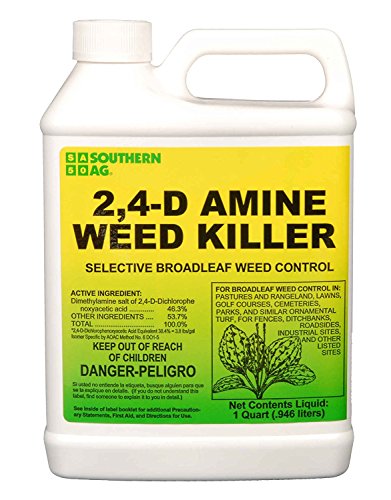
This quart is the economical pick for large lawns. It is a straight 2,4-D amine concentrate, with 3.8 pounds of 2,4-D acid equivalent per gallon, and it controls dandelion, plantain, chickweed, clover and many other broadleaf weeds without harming most established grasses. The label rate runs from one to four pints per acre, so a single quart covers a large area when mixed at the lawn rate. Results show within a day or two, with full control over one to two weeks. It suits homeowners who own a tank sprayer and treat a big kikuyu or couch lawn.
Specs
- 32 oz quart liquid concentrate
- 3.8 lb 2,4-D acid equivalent per gallon
- Active ingredient: dimethylamine salt of 2,4-D
- Label rate of 1 to 4 pints per acre
- Selective broadleaf control for lawns, parks and golf courses
Best for: Large lawns where a single quart must cover a wide area.
Watch out for: Do not use on bentgrass, St. Augustinegrass, carpetgrass, centipedegrass or dichondra, and keep spray off garden plants.
Ortho WeedClear Lawn Weed Killer Ready-to-Use

This jug is the no-mixing option. It comes ready to use in a one-gallon container, so there is nothing to measure, dilute or pour into a sprayer. The formula kills crabgrass, dandelion, clover and other listed weeds, and it is made for spot treating individual weeds and patches across the lawn. That makes it a good fit for a smaller lawn or for a homeowner who only has a few weeds to deal with. The spray goes where it is aimed, and the lawn around each weed stays untouched when the label directions are followed.
Specs
- 1 gal ready-to-use jug
- Kills crabgrass, dandelion, clover and other listed weeds
- No mixing or measuring needed
- For spot treating individual weeds and patches
Best for: Small lawns and quick spot work with no mixing.
Watch out for: Spot treat only the weeds, and do not spray the whole lawn with this jug.
BioAdvanced All-in-One Lawn Weed and Crabgrass Killer

This bottle covers both weed groups in one pass. Its three-way formula combines 2,4-D, dicamba and quinclorac, so it handles broadleaf weeds such as dandelion and clover as well as crabgrass and other grassy weeds. The 32-ounce bottle connects to a garden hose and sprays as a ready-to-spray formula, which suits a homeowner who wants to walk the lawn and treat everything at once. It kills weeds to the root without harming listed lawn grasses when used as directed, and it works on cool-season and warm-season grasses alike.
Specs
- 32 oz ready-to-spray bottle
- Three-way formula: 2,4-D, dicamba and quinclorac
- Kills listed broadleaf and grassy weeds, including crabgrass
- Hose-end sprayer, no tank sprayer needed
Best for: Lawns with broadleaf weeds and crabgrass mixed together.
Watch out for: Do not apply when daytime temperatures exceed 90 degrees Fahrenheit, and check the label for your grass type first.
Scotts Turf Builder Weed and Feed 3

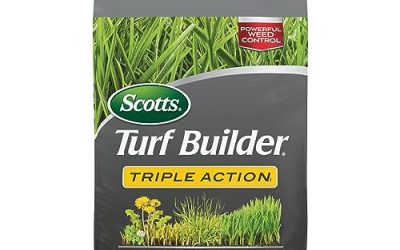
This bag feeds the lawn while it weeds it. The granular formula combines lawn fertilizer with weed control, so one pass with a spreader handles dandelion and clover while feeding the grass. The 5,000-square-foot bag suits a medium lawn, and the granules spread evenly with a rotary spreader on a dry lawn. Water the lawn after spreading so the granules settle, then let the formula work. It is the pick for a homeowner who wants the lawn greener and cleaner after a single job, rather than spraying and feeding on separate days.
Specs
- 14.29 lb granular bag
- Covers up to 5,000 sq ft
- Weed killer plus lawn fertilizer
- Controls dandelion and clover
Best for: Medium lawns that need feeding and weeding in one pass.
Watch out for: Apply to a dry lawn with a spreader, and water afterwards so the granules settle.
Which One Fits Your Situation
A Small Lawn With a Few Scattered Weeds
Grab the Ortho WeedClear jug or the BioAdvanced hose-end bottle. Both are ready to use, so there is no mixing and no leftover concentrate to store. Aim at each weed, leave the rest of the lawn alone, and check back in a week to see which weeds need a second pass. A small lawn rarely needs a concentrate or a spreader.
A Large Lawn With Weeds Across the Whole Area
Pick a concentrate. Southern Ag covers the most ground per bottle, and the Spectracide concentrate treats a wide area with a hose-end or tank sprayer. Mix at the label rate, walk the lawn in even passes, and mark where you have been so no strip gets missed or doubled. A large kikuyu lawn rewards a broadcast pass far more than spot spraying one weed at a time.
Crabgrass Mixed In With Broadleaf Weeds
Choose a product that names crabgrass on its label. BioAdvanced All-in-One and Ortho WeedClear both list crabgrass alongside dandelion and clover, so one pass handles both groups. A plain broadleaf formula will leave the crabgrass standing, and that gap fills in fast in warm weather. Treat crabgrass while it is young and actively growing for the best result.
A Lawn That Needs Feeding as Well as Weeding
Take the Scotts Turf Builder Weed and Feed 3. One pass with a spreader feeds the grass and controls dandelion and clover at the same time, which suits a lawn that looks thin and pale as well as weedy. Spread on a dry lawn, water afterwards, and give the grass a few weeks to thicken up and crowd out new weeds.
Common Mistakes
- Spraying on a hot afternoon above 90 degrees Fahrenheit, which can injure the grass along with the weeds.
- Skipping the grass list on the label and using a formula that does not suit kikuyu, couch or buffalo grass.
- Mowing right after spraying, which cuts off the treated leaves before the formula moves to the roots.
- Spraying on a windy day, so the drift lands on flower beds, vegetables and shrubs.
- Treating a dry, stressed lawn and expecting the same result as on a lawn that is watered and growing.
Frequently Asked Questions
Will these weed killers harm kikuyu or couch grass?
No, not when the label lists your grass and you follow the label rate. Kikuyu and couch handle most of the formulas here well. Buffalo and LM grass can be more sensitive, so check the label for your exact grass before you buy. Never use a formula on a grass type the label excludes, and skip spraying when the lawn is dry and stressed.
How soon can children and pets return to the lawn?
Wait until the spray has fully dried, and follow the waiting time printed on your product label. Most of these formulas allow people and pets back on the lawn once the treated area is dry to the touch. Keep children and pets off the lawn during spraying and while the leaves are still wet, and store the bottle or bag where children cannot reach it.
Can I mow before or after spraying?
Mow two or three days before spraying, so the weeds show fresh leaf for the spray to land on. After spraying, leave the lawn alone for a few days so the formula can move down to the roots. Mowing too soon after treatment cuts off the treated leaves and weakens the result, so wait at least two or three days before the next cut.
Do I need a second application?
Often, yes. Tough weeds such as clover and crabgrass may need a second pass a few weeks after the first, and the label sets the minimum gap between applications. Most of these products allow no more than two applications a year, so save the second pass for the weeds that survive the first. A thick, healthy lawn then fills the gaps and keeps new weeds out.