Our Short List of 3
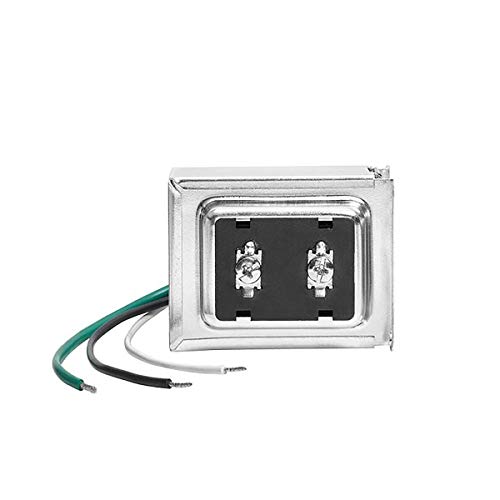
- Best for: A Ring wired doorbell that drops offline or will not stay charged on an old transformer.
- Input: 120V AC, 60 Hz
- Output: 16V, 30VA
- Compatible with Video Doorbell Wired, Wired Doorbell Plus, and Wired Doorbell Pro
- Replaces most North American doorbell transformers

- Best for: Replacing a weak 16V 10VA transformer when you want a warranty and a quiet unit for a fair outlay.
- Input: 120V AC, 60 Hz
- Output: 16V AC, 30VA
- Current rating: 1.88 A
- UL Certified

- Best for: A home running two video doorbells, or a 24V chime, from a single transformer.
- Output: 24V, 40VA
- Compatible with Ring Video Doorbell Pro
- Powers smart thermostats and 24V mechanical chimes
- Threaded hub mount
All 4 Picks at a Glance
| Product | Specs | Action |
|---|---|---|
| Ring Hardwired Transformer |
| Check price on Amazon |
| Newhouse Hardware 30TR |
| Check price on Amazon |
| Newhouse Hardware 40TR |
| Check price on Amazon |
 Maxdot 24V 40VA |
| Check price on Amazon |
Key takeaways
- Five hardwired doorbell transformers compared for Ring and Nest video doorbells, covering 16V 30VA upgrades, 24V 40VA power, mounting, and safety.
A video doorbell that keeps going offline usually has a power problem, not a Wi-Fi problem. Most older homes still run a 16V 10VA transformer, which was fine for a mechanical chime and a lighted button but cannot feed a camera, a chime, and a Wi-Fi radio at the same time. The real decision is how much power your doorbell needs and whether the transformer can deliver it without running hot, so the choice comes down to voltage, volt-amps, and where the unit will live.
This article is for homeowners replacing a tired transformer behind a Ring or Nest wired doorbell, and for anyone adding a second video doorbell or a smart thermostat to the same circuit. The five transformers below were chosen from the names and specifications on their Amazon product pages, covering the common 16V 30VA upgrade, the stronger 24V 40VA class, and one unit made by Ring itself.
Quick Picks
As an Amazon Associate we earn from qualifying purchases
| Product | Best for | Key spec from title |
|---|---|---|
| Ring Hardwired Transformer | A Ring wired doorbell that needs the maker’s own power fix | 16V 30VA output |
| Newhouse Hardware 30TR | Replacing a weak 16V 10VA unit with a warranty behind it | 16V 30VA, UL Certified |
| Newhouse Hardware 40TR | Powering two video doorbells or a 24V chime | 24V 40VA output |
| RAGNAROS 16V 30VA | The cheapest hardwired 16V upgrade that still carries a UL rating | 16V 30VA, Ring Pro and Nest Hello |
| Maxdot 24V 40VA | A 24V setup that also feeds a smart thermostat | 24V 40VA, UL Listed |
How to Choose
Match the voltage and volt-amps to the doorbell
Start with the doorbell maker’s own numbers, not with what the old transformer says. Ring lists 16 to 24 VAC and 10 to 40 VA for its Wired Doorbell Plus, and Google lists 16 to 24 V AC and 10 to 40 VA for wired Nest doorbells. In practice, 16V at 30VA is the standard upgrade for one video doorbell, because it triples the capacity of the old 16V 10VA units found in most homes. A 24V 40VA unit makes sense only when the doorbell accepts 24V or when a second device shares the circuit.
Check the mount before you buy
Most of these transformers fasten to a junction box with a threaded hub, and the mounting style decides whether the swap is a fifteen-minute job or a rewiring project. Read the listing for the mount type and measure the space around the existing box, since a transformer that is wider than the old one may not clear a nearby stud or pipe. Never mount a transformer inside a finished wall: the unit generates heat while it works and needs open air around it to stay cool.
Count every device on the circuit
One video doorbell plus one mechanical chime is a light load, but the numbers add up fast once a second doorbell, a second chime, or a smart thermostat joins the same transformer. Add the volt-amp draw of each device and compare the total with the transformer’s rating, leaving some headroom rather than running at the limit. A transformer that runs at its limit for hours also runs hotter, which shortens its life. If the total is close to 30VA, step up to a 24V 40VA unit instead of hoping the smaller one copes.
Look for certification and a stated warranty
A transformer sits on mains power all day, so certification matters more here than on most doorbell parts. Look for a UL listing or UL Class 2 rating on the product page, and treat a vague “certified” claim with suspicion if no standard is named. A stated warranty period is a useful second signal: Newhouse, for example, states a two-year warranty against manufacturer defects on the 30TR, which is the kind of concrete promise worth comparing. A longer warranty also says something about the maker’s confidence, since a brand that expects early failures does not promise two years of cover.
The 5 Best Options
Ring Hardwired Transformer
- Best for: A Ring wired doorbell that drops offline or will not stay charged on an old transformer.
- Input: 120V AC, 60 Hz
- Output: 16V, 30VA
- Compatible with Video Doorbell Wired, Wired Doorbell Plus, and Wired Doorbell Pro
- Replaces most North American doorbell transformers
A Ring wired doorbell that drops offline or will not stay charged on an old transformer.
It only makes sense if you own a compatible Ring wired doorbell; it does nothing extra for a Nest or a mechanical chime alone.
Ring’s own transformer is the safest choice for a Ring wired doorbell because the maker sized it for its own cameras. It replaces older and underpowered transformers to restore full performance to a Video Doorbell Wired, Wired Doorbell Plus, or Wired Doorbell Pro, and it ships with the tools needed for the swap. At 16V and 30VA it matches the capacity Ring recommends, so there is no guessing about whether the numbers are right.
Newhouse Hardware 30TR
- Best for: Replacing a weak 16V 10VA transformer when you want a warranty and a quiet unit for a fair outlay.
- Input: 120V AC, 60 Hz
- Output: 16V AC, 30VA
- Current rating: 1.88 A
- UL Certified
Replacing a weak 16V 10VA transformer when you want a warranty and a quiet unit for a fair outlay.
Do not install it inside a wall, since the transformer generates heat and needs space and ventilation; a few owners report failure after about a year and a half.
The 30TR is the value pick in this roundup: a straightforward 16V 30VA replacement from a long-running hardware brand, UL certified, with a two-year warranty against manufacturer defects. Its threaded hub mounts directly to the outside of a standard junction box, and owners report that it runs a mechanical chime and a Ring button quietly. The current rating of 1.88 A gives it real headroom over the 10VA units it replaces.
Newhouse Hardware 40TR
- Best for: A home running two video doorbells, or a 24V chime, from a single transformer.
- Output: 24V, 40VA
- Compatible with Ring Video Doorbell Pro
- Powers smart thermostats and 24V mechanical chimes
- Threaded hub mount
A home running two video doorbells, or a 24V chime, from a single transformer.
Only buy it if your doorbell and chime accept 24V; a 16V-only chime must not be fed 24 volts. The listing crawl showed no featured offers, so confirm it is selling before ordering.
The 40TR is the heavy lifter of the group, delivering 24 volts at 40VA for homes where one transformer feeds more than one device. The listing states it powers Ring doorbells, smart thermostats, and 24V mechanical chimes, so it suits a house with two video doorbells or a 24V chime that a 16V unit cannot drive. Its threaded hub mount follows the same pattern as the 30TR, fastening to the outside of a junction box.
RAGNAROS 16V 30VA
RAGNAROS is the cheapest hardwired 16V upgrade in this roundup, aimed squarely at homes replacing a 16V 10VA unit. The listing describes it as the replacement for that size, and it carries a UL rating with a 120V AC input and a 16V AC 30VA output. It is compatible with the Ring Video Doorbell, Ring Video Doorbell Pro, Ring Video Doorbell 2, and Nest doorbells, and it clamps to an electrical box.
Specs
- Input: 120V AC, 60 Hz
- Output: 16V AC, 30VA
- UL rated
- Compatible with Ring Video Doorbell, Ring Video Doorbell Pro, Ring Video Doorbell 2, and Nest doorbells
- Package includes 1 instruction and 1 transformer
Best for: The lowest-cost hardwired fix for a home swapping out a 16V 10VA transformer.
Watch out for: The listing is thin on detail beyond the headline specs, so check the mounting and wiring details on the product page before buying.
ASIN: B07H334M46
Maxdot 24V 40VA
- Best for: A 24V doorbell plus a smart thermostat sharing one transformer.
- Input: 120V, 60 Hz
- Output: 24V, 40VA
- Load voltage: 24V; no-load voltage about 27V
- UL Listed
A 24V doorbell plus a smart thermostat sharing one transformer.
The no-load output runs about 27V, so confirm your doorbell’s acceptable input range first; the listing gives few details beyond the headline specs.
Maxdot’s 24V unit is the flexible pick for a house where the transformer feeds more than a doorbell. It outputs 24 volts at 40VA and lists compatibility with Honeywell thermostats and doorbells, plus Nest, Ecobee, Sensi, and Ring doorbells, so one unit can cover a video doorbell and a smart thermostat together. It mounts by screw, thread, or threaded clamp to the electrical box, and the maker includes wiring diagrams for the install.
Which One Fits Your Situation
Your Ring wired doorbell keeps dropping offline
Pick the Ring Hardwired Transformer. It is the only unit here made by the doorbell maker for its own wired models, it outputs the 16V 30VA Ring recommends, and it comes with the tools for the swap. There is no compatibility question to answer, and the install replaces the old unit directly.
You are replacing a tired 16V 10VA unit on a budget
Pick the RAGNAROS if the lowest outlay matters most, or the Newhouse 30TR if a two-year warranty and a quieter record matter more. Both output 16V at 30VA and both are UL rated, so either one triples the capacity of the old transformer. Choose the 30TR when the warranty is worth the extra cost.
You run two video doorbells or a 24V chime
Pick the Newhouse 40TR. Its 24V 40VA output covers two Ring doorbells or a 24V mechanical chime from a single unit, and the listing states it also powers smart thermostats. The 40TR’s threaded hub mounts to the outside of a junction box, the same way the 30TR does. Check first that every device on the circuit accepts 24V, since a 16V-only chime cannot take it.
Your smart thermostat shares the transformer
Pick the Maxdot 24V 40VA. It lists Honeywell, Nest, Ecobee, and Sensi thermostats alongside Ring doorbells, so one transformer feeds both jobs. The unit mounts by screw, thread, or threaded clamp, and the maker includes wiring diagrams for the install. Confirm the no-load voltage of about 27V sits inside your doorbell’s acceptable range before you wire it in.
Common Mistakes
- Buying a 16V 10VA replacement for a video doorbell: the old size cannot feed a camera and a chime, and the doorbell will keep dropping offline.
- Installing the transformer inside a finished wall: it generates heat and needs open air, so it belongs on the outside of a junction box.
- Working on the wires with the power still on: switch the circuit off at the breaker and test that it is dead before touching anything.
- Matching the volts but ignoring the volt-amps: two devices on one 30VA transformer can overload it, so add up the loads first.
- Ordering a 24V unit for a 16V-only chime without checking the chime’s rating: the wrong voltage can damage the chime.
Frequently Asked Questions
What size transformer does a Ring video doorbell need?
Ring lists 16 to 24 VAC and 10 to 40 VA for its Wired Doorbell Plus, and Google lists the same range for wired Nest doorbells. For one video doorbell, a 16V 30VA transformer is the standard upgrade, since it triples the capacity of the old 16V 10VA units. Choose a 24V 40VA unit only when the doorbell accepts 24V or when a second device shares the circuit.
Can I use a 24V transformer with a 16V doorbell?
Only if the doorbell maker lists 24V as an acceptable input. Ring and Google both list 16 to 24 volts for their wired models, so those doorbells accept either. A 16V-only mechanical chime or an older doorbell that lists 16V alone must not be fed 24 volts, so check the rating on the device itself before ordering.
Where is the doorbell transformer in my house?
Look along a wall in the garage, basement, or attic, close to the ceiling, where it is usually fastened to the outside of a junction box. It is a small metal box with low-voltage wires running to the chime and the button. If you cannot find it, follow the bell wire back from the chime, or ask an electrician to trace it.
Do I need an electrician to replace a doorbell transformer?
A confident homeowner can swap one after switching the circuit off at the breaker and confirming the wires are dead, since the job is two mains wires and two low-voltage wires. Hire an electrician if the wiring looks damaged, the breaker panel is unclear, or you are not comfortable working around mains voltage.