Our Short List of 3

All 4 Picks at a Glance
| Product | Specs | Action |
|---|---|---|
 1. Renogy Deep Cycle AGM 12 Volt 100Ah Battery — best overall | Check price on Amazon | |
| 2. Weize Deep Cycle AGM 12 Volt 100Ah Battery — best value in Group 31 | Check price on Amazon | |
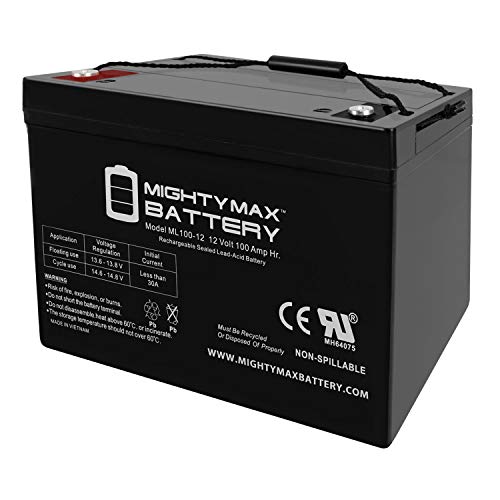 3. Mighty Max Battery ML100-12 — best Group 27 fit | Check price on Amazon | |
 4. Interstate Batteries 12V 110Ah SLA/AGM Deep Cycle Battery (DCM0100) — most capacity here | Check price on Amazon |
Key takeaways
- Compare the best maintenance free AGM RV battery options by capacity, group size, usable amp-hours and charging, with four sealed deep-cycle picks for RV house power.
As an Amazon Associate we earn from qualifying purchases.
Affiliate Disclosure: This article contains affiliate links. If you buy through a link on this page, we may earn a commission at no extra cost to you. Product specifications are taken from the manufacturer and retailer listings cited for each pick, and we have not personally tested these batteries.
A flooded house battery asks for regular attention that most RV owners would rather skip. You have to check the water level, top up cells with distilled water, clean corrosion from terminals, and vent the compartment because a charging flooded battery gives off gas. A maintenance free AGM RV battery removes almost all of that routine. AGM stands for absorbed glass mat: the electrolyte is held in fiberglass separators between the plates instead of sitting free as liquid, the case is sealed and valve-regulated, and there is no watering, no routine electrolyte check, and far less terminal mess to manage.
That convenience is the reason AGM remains a popular house battery choice even now that lithium batteries are widely available. An AGM battery works with the converter and charger already fitted in most RVs, tolerates cold storage better than many owners expect, and can be mounted inside a sealed compartment without the venting routine a flooded battery needs. The trade-offs are real and worth stating up front: AGM is heavy, only about half of its rated capacity should be used regularly, and it needs correct charging voltages to reach its full cycle life. This guide compares four sealed deep-cycle AGM batteries that are sold for RV house use, explains how much usable power each one actually gives you, and walks through sizing, charging, and installation so you can choose with your eyes open.
Quick picks
- Best overall: Renogy Deep Cycle AGM 12 Volt 100Ah Battery — a proven 100Ah deep-cycle AGM with low self-discharge, series and parallel support, and published cycle and charge figures.
- Best value in a Group 31 case: Weize Deep Cycle AGM 12 Volt 100Ah Battery — the same 100Ah class in a standard Group 31 footprint, with a high maximum discharge figure on its listing.
- Best Group 27 fit: Mighty Max Battery ML100-12 — a 100Ah sealed AGM in the smaller Group 27 case, useful when a Group 31 battery will not fit the tray.
- Most capacity in this group: Interstate Batteries 12V 110Ah SLA/AGM Deep Cycle Battery (DCM0100) — 110Ah in a Group 31-size case for owners who want the largest reserve here.
How we chose these batteries
Every pick in this guide had to meet the same basic test. It had to be a true deep-cycle AGM battery, not a starting battery with a deep-cycle label added in marketing copy. It had to be sealed and maintenance free, with no watering requirement. It had to be sold for RV, solar, marine, cabin, or off-grid house use, because that is the duty cycle an RV house battery actually lives. And it had to have a traceable Amazon US listing, so the model, capacity, and specifications in this article can be checked against a real product page rather than a roundup that copies another roundup.
What maintenance free really means with AGM
Maintenance free does not mean attention free forever. It means there is no electrolyte to top up and no caps to open. The electrolyte is absorbed in the glass mat, the case is sealed, and a pressure-relief valve handles the small amount of gas produced during charging, which is why these batteries are described as valve-regulated lead-acid, or VRLA.
A note on evidence: these picks were checked against indexed copies of their Amazon US listings, not a live in-stock check today. Confirm stock, group size, and seller on the live page before ordering.
The four picks in detail
1. Renogy Deep Cycle AGM 12 Volt 100Ah Battery — best overall
The Renogy 100Ah AGM is the best-known battery in this guide, and its listing is also one of the most complete, which matters when you are trying to size a bank from published figures instead of guesses. The listing describes a 12 volt, 100 amp-hour deep-cycle AGM battery with a maximum discharge current of 1100 amps for five seconds, a monthly self-discharge rate below 3 percent at room temperature, and a sealed, maintenance-free design intended for RV, camping, cabin, marine, and off-grid use.
Renogy publishes a cycle figure of 500 cycles at 50 percent depth of discharge, a maximum continuous charging current of 30 amps, and charge voltage ranges that let you check compatibility with your converter or solar charge controller before you buy. The battery measures 13.1 by 6.9 by 8.6 inches and weighs 63.9 pounds. It uses M8 terminal bolts, which are included according to the listing questions and answers, and it supports series connections and parallel connections up to four batteries in parallel.
For an RV owner, the useful translation is this: one battery gives you about 50 usable amp-hours if you follow the standard AGM practice of not discharging below half on a regular basis. That is enough for lights, a water pump, phone charging, a fan, and a modest television load for an evening, but it is not a large reserve for a residential fridge or heavy inverter use. Two in parallel double the usable reserve and are the more realistic starting point for dry camping. The low self-discharge is a genuine advantage for storage, because a charged battery that loses only a small amount per month arrives at spring in far better shape than one that sat and drained.
Watch-outs are the weight, the prorated nature of the warranty described in roundups of the maker pages, and the need for an AGM or sealed lead-acid charge setting. Renogy’s own guidance in the listing answers is to choose the sealed setting on a charge controller and to avoid routinely discharging below 50 percent. Follow that, and this is the most straightforward single-battery or paired-bank choice in the guide.
2. Weize Deep Cycle AGM 12 Volt 100Ah Battery — best value in Group 31
The Weize 100Ah AGM gives you the same headline capacity as the Renogy in a Group 31 case, and its Amazon US listing confirms the model as the QS12-100-T in its product information. The listing describes a 12 volt, 100 amp-hour deep-cycle battery for RV, solar, camping, cabin, marine, and off-grid systems, with a maximum discharge current of 1150 amps and a self-discharge rate of about 3 percent per month.
The dimensions on the listing are 12.99 by 6.73 by 8.34 inches, with a listed battery weight of 63 pounds. That Group 31 footprint is the key fit question: many RV battery trays and boxes are built around Group 24, Group 27, or Group 31 sizes, and a Group 31 battery simply will not drop into a Group 24 box. Measure the tray, check the height clearance for cables, and confirm the terminal layout before ordering. The listing notes that the battery can be connected in series without a stated limit and up to four in parallel, which matches the pattern of the other 100Ah models here.
In use, expect the same usable-capacity rule as any 100Ah AGM: plan on roughly half the rated amp-hours for regular cycling if you want the battery to last. The Weize is a sensible choice when it is the well-priced 100Ah option from a seller you can verify, when the Group 31 size fits your compartment, and when a shorter warranty period than the Renogy offers is an acceptable trade for the saving. Check the warranty terms on the listing itself at the time you buy, because warranty presentation on marketplace listings can change with the seller.
3. Mighty Max Battery ML100-12 — best Group 27 fit
The Mighty Max ML100-12 exists in this guide for one clear reason: fit. It is a 12 volt, 100 amp-hour sealed SLA AGM battery in a Group 27 case, measuring about 12.09 by 6.65 by 8.48 inches according to its listing material, which makes it noticeably shorter than the Group 31 batteries above. Plenty of RVs, travel trailers, and older battery boxes were built for Group 27, and forcing a larger case into that space is how cables get pinched and boxes get cut. If your tray is Group 27, this is the 100Ah AGM here that respects that limit.
The listing describes the ML100-12 as a rechargeable, maintenance-free AGM battery with internal thread terminals, built for deep-cycle service in solar, backup, and similar applications, and roundups of the listing describe it as UL certified. It does not publish a maximum discharge figure in the material reviewed for this guide, so we do not invent one. For house loads — lights, pumps, fans, electronics — that missing headline figure is less important than capacity, fit, and correct charging, but if you plan unusually heavy inverter draws, choose a battery whose maker publishes the discharge data you need.
Expect the same ownership pattern as the other 100Ah picks: about 50 usable amp-hours per cycle as a planning figure, a weight in the low sixty-pound range that calls for a two-handed or two-person lift, and a one-year warranty as described in roundups of the listing. The battery ships as the battery and terminal screws, without a wire harness or mounting accessories, so budget for cables and hold-downs if you are building a new bank rather than replacing like for like.
The ML100-12 is not the pick if your tray takes Group 31 and you want the most published specification detail. It is the pick when the smaller case is the difference between a clean installation and a compromised one.
4. Interstate Batteries 12V 110Ah SLA/AGM Deep Cycle Battery (DCM0100) — most capacity here
The Interstate DCM0100 is the capacity option in this guide. Its Amazon US listing describes a 12 volt, 110 amp-hour SLA/AGM deep-cycle battery for solar, wind, and RV applications, with insert terminals, sold by Interstate Batteries and shipped from Amazon in the indexed copy of the page, which showed the battery in stock at the time that copy was captured. That capture is not recent, so confirm stock and seller on the live page before relying on it.
Ten extra amp-hours over the 100Ah models sounds small, and in usable terms it is about five extra amp-hours per cycle under the half-capacity planning rule. That can still be the margin that carries a fridge and lights through a night without pushing the battery deeper than you intended, and it comes in roughly the same footprint as the other Group 31 batteries: the maker specification gives dimensions of about 12.99 by 6.81 by 8.35 inches. The cost of that capacity is weight. At about 71.5 pounds in the listing material, this is the heaviest battery here, and you should plan the lift, the tray strength, and the hold-down accordingly.
Quick comparison
| Pick | Capacity | Case | Usable planning figure | Terminal note | Best for |
|---|---|---|---|---|---|
| Renogy 100Ah AGM | 100Ah | About 13.1 x 6.9 x 8.6 in | About 50Ah | M8 bolts | Most RV house banks |
| Weize 100Ah AGM | 100Ah | Group 31 | About 50Ah | Listing layout, check before ordering | Value in a Group 31 tray |
| Mighty Max ML100-12 | 100Ah | Group 27 | About 50Ah | Internal thread | Smaller Group 27 trays |
| Interstate DCM0100 | 110Ah | Group 31 class | About 55Ah | Insert terminals | Most reserve in this group |
How to size an AGM house bank honestly
Start with a load list, not with a battery. Write down each 12 volt load you actually use, its approximate amp draw, and how many hours it runs on a typical day off grid. Lights, pump, furnace fan, phone chargers, a laptop, and a television add up faster than most owners guess, and the furnace fan in cold weather is often the single largest overnight consumer. Multiply amps by hours for each item and add the results. That total is your daily amp-hour need.
Then divide by the usable fraction. For AGM, plan to use about half the rated capacity on a regular basis. A daily need of 50 amp-hours therefore calls for about 100 amp-hours of rated AGM capacity as a minimum, and more if you want a second day without charging or a margin for cold weather, which reduces effective capacity. This is why so many RVs that dry camp seriously end up with two house batteries in parallel: it is not excess, it is the arithmetic of the chemistry.
Charging an AGM battery correctly
AGM batteries need a charger or converter with an AGM or sealed lead-acid profile. The charge voltages differ from a flooded setting, and using the wrong profile repeatedly will shorten the battery’s life even though nothing appears to go wrong on any single charge. The Renogy material in this guide lists cycle charge voltages in the mid-14 volt range and float voltages in the mid-13 volt range, which is typical for this class, but you should always use the figures published for the specific battery you buy, printed on its listing, label, or manual.
Installation and safety notes
Lead-acid batteries of any type are heavy, and every battery in this guide weighs more than sixty pounds. Lift with help, keep the battery upright while carrying it unless the maker states otherwise, and secure it with a proper hold-down so it cannot shift in transit. A battery that moves can chafe cables, loosen terminals, or in the worst case short against metal.
Connect the bank with cables sized for the load and the run length, protect the positive lead with an appropriate fuse close to the battery, and tighten terminals to the maker’s guidance rather than by feel. When wiring batteries in parallel, use identical batteries of the same age and capacity, and take the main positive and negative feeds from opposite ends of the bank so the batteries share load evenly. Never mix an old battery into a new bank: the weakest battery will drag the others down and the whole bank will age at the rate of its worst member.
Who should choose AGM, and who should not
Choose a maintenance free AGM battery if your RV already has an AGM-compatible charger, if you want a sealed battery that can live inside without watering or venting work, if your trips are weekends and short stays with regular access to charging, and if you would rather accept weight than rewire for a different chemistry. AGM is also a calm choice for owners who store the RV in cold conditions and charge it with standard equipment.
Frequently asked questions
Can I replace a flooded house battery with an AGM battery of the same group size?
Usually yes, provided the group size and terminal layout match and your charger or converter has an AGM or sealed setting. The physical swap is simple; the charge profile is the part to verify. If your converter cannot be set for AGM, plan to replace it or use a suitable external smart charger.
How long should a maintenance free AGM RV battery last?
Service life depends on depth of discharge, charging, and temperature more than on the calendar. A battery cycled to about half its capacity and recharged promptly and fully will last far longer than the same battery run flat and left sitting. The Renogy in this guide publishes 500 cycles at 50 percent depth of discharge, which is a useful benchmark for the class rather than a promise for any individual battery.
How many AGM batteries do I need for dry camping?
Work from your daily amp-hour use. If you use about 50 amp-hours a day and want to stay within the half-capacity planning rule, one 100Ah battery is a bare minimum for a single night and two in parallel are the comfortable answer for most couples in a mid-size RV. Add capacity or a reliable daily charging source for longer stays.
Bottom line
For most RV owners, the Renogy 100Ah AGM is the easiest recommendation in this guide: complete published specifications, low self-discharge, and flexible series and parallel support. The Weize 100Ah is the value alternative when its Group 31 case fits and its listing terms suit you. The Mighty Max ML100-12 earns its place on fit alone for Group 27 trays. The Interstate DCM0100 is the choice when you want the most capacity in this class and can accept the heaviest lift. Whichever you choose, confirm the live listing, the group size, and the seller before ordering, charge it on an AGM profile, and plan your loads around half the rated capacity. Do those three things and a maintenance free AGM bank will give you quiet, uneventful house power, which is exactly what a house battery is for.