Our Short List of 3

- Best for: Homeowners who need one sturdy saw for framing lumber, shelving, and general DIY cutting.
- Blade length: 15 inches
- Teeth per inch: 9
- Tooth technology: SharpTooth with triple-ground teeth
- Blade: 15 percent thicker than a conventional saw blade for straighter cuts with less binding

- Best for: DIYers who want cleaner crosscuts on boards, trim, and hardboard without reaching for a power saw.
- Blade length: 15 inches
- Points per inch: 12
- Tooth technology: SharpTooth with three cutting surfaces
- Handle material: wood

- Best for: Fast rough cuts through softwood and framing lumber on renovation and garden jobs.
- Blade length: 15 inches
- Blade material: steel
- Blade thickness: 1 mm
- Tooth technology: M2 tooth technology with Tri-Ground teeth
All 5 Picks at a Glance
| Product | Specs | Action |
|---|---|---|
| STANLEY FATMAX Hand Saw, 15-Inch (20-045) |
| Check price on Amazon |
| STANLEY Hand Saw, 12-Point/Inch, Sharp Tooth, 15-Inch (20-526) |
| Check price on Amazon |
| IRWIN Hand Saw, Coarse Cut, ProTouch Handle, 15-Inch (2011201) |
| Check price on Amazon |
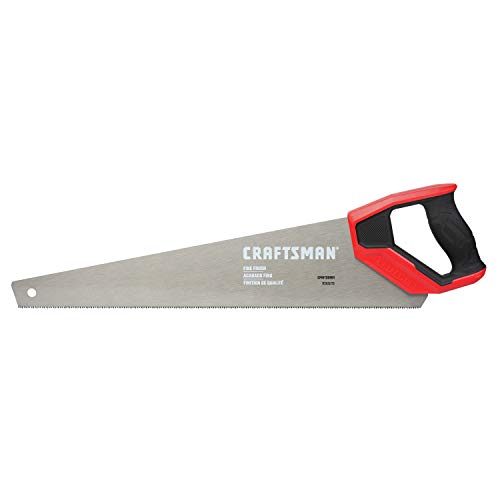 CRAFTSMAN Hand Saw, 20-Inch, Fine Finish (CMHT20881) |
| Check price on Amazon |
 SUIZAN Ryoba Double Edge Saw 9.5″ |
| Check price on Amazon |
Key takeaways
- Compare five hand saws for woodworking and DIY, from fast coarse-cut panel saws to a fine-finish saw and a Japanese pull saw, and pick the right blade.
A hand saw is the tool you reach for when a power saw would be overkill: trimming a board to length or cutting a dowel flush. The real decision is not whether to own one, but which cutting style matches the work you actually do. A coarse panel saw rips through framing lumber in seconds yet leaves a rough edge, while a fine-tooth saw moves slowly and leaves a surface that needs little sanding. Pick the wrong tooth pattern and every cut becomes either a chore or a cleanup job.
This guide covers five hand saws chosen from their Amazon listing names and specifications, spanning general DIY cutting, fine finish work, and precise Japanese pull saws. It suits homeowners building shelves and repairing trim, woodworkers who want a quiet saw for joinery, and anyone keeping a compact toolkit for the house. The picks range from a 15-inch all-rounder to a 20-inch fine-finish saw and a 9.5-inch double-edge pull saw, covering rough framing, neat crosscuts, and delicate work alike.
Quick Picks
As an Amazon Associate we earn from qualifying purchases.
| Product | Best for | Key spec from title |
|---|---|---|
| STANLEY FATMAX Hand Saw, 15-Inch (20-045) | Everyday DIY cutting and framing lumber | 15-inch blade |
| STANLEY Hand Saw, 12-Point/Inch, Sharp Tooth, 15-Inch (20-526) | Neater crosscuts on boards and trim | 12-point-per-inch teeth |
| IRWIN Hand Saw, Coarse Cut, ProTouch Handle, 15-Inch (2011201) | Fast rough cuts through softwood | Coarse-cut 15-inch blade |
| CRAFTSMAN Hand Saw, 20-Inch, Fine Finish (CMHT20881) | Long, clean cuts on wide boards and plywood | 20-inch fine-finish blade |
| SUIZAN Ryoba Double Edge Saw 9.5″ | Precise rip and crosscuts in fine woodworking | 9.5-inch double-edge blade |
How to Choose
Blade Length and Reach
Blade length decides how much wood each stroke removes and how wide a board you can cut in one pass. A 15-inch panel saw handles two-by lumber, shelving boards, and most household trimming, which is why three of the saws in this guide share that length. A 20-inch blade such as the CRAFTSMAN covers wider boards and plywood sheets with fewer strokes, so long rips feel less tiring, though the extra length is harder to control in a tight corner or inside a cabinet. Shorter blades, like the 9.5-inch SUIZAN, trade reach for control and suit bench work where the workpiece is clamped close in front of you. Match the blade to the widest board you cut regularly.
Tooth Count and Cut Finish
Tooth count, measured in teeth per inch, is the clearest guide to how a saw will behave. Fewer, larger teeth clear waste quickly and power through softwood, which makes a coarse saw the right choice for framing and fencing. More teeth per inch produce a smoother edge because each tooth takes a smaller bite, so a fine-finish saw leaves trim and plywood edges that need less sanding. The trade-off is speed: a fine saw demands more strokes on thick stock. Some blades split the difference with two tooth patterns on one blade, such as the SUIZAN Ryoba, which carries a rip edge on one side and a crosscut edge on the other. Weigh speed against surface quality before you choose.
Push Saws and Pull Saws
Most Western hand saws cut on the push stroke, with the blade driving forward. They feel natural to most toolbox owners, and their rigid, thick blades stay straight through knots and dense grain. Japanese pull saws work the opposite way: the blade is thin, the teeth cut as you draw the saw toward you, and the tension on the pull stroke keeps the thin blade from buckling. That design produces a narrow kerf and a clean cut with little effort, but it asks for a lighter touch and a different rhythm. If you already own a push saw, a pull saw is a useful second tool for joinery and flush cuts, not a replacement for rough work.
Handle Comfort and Marking Guides
A hand saw earns its keep through repeated strokes, so the handle matters as much as the blade. Look for a grip that fills your palm without forcing your fingers into an awkward angle, and a shape that holds steady through a long cut. Several saws here carry a built-in guide for marking 45-degree and 90-degree angles on the handle or the back of the blade. That feature turns the saw into a square for quick layout work on trim and shelving, saving a trip back to the toolbox. Before buying, check the handle against the work you do, since a grip that suits short household cuts may chafe during an afternoon of framing.
The 5 Best Options
STANLEY FATMAX Hand Saw, 15-Inch (20-045)
- Best for: Homeowners who need one sturdy saw for framing lumber, shelving, and general DIY cutting.
- Blade length: 15 inches
- Teeth per inch: 9
- Tooth technology: SharpTooth with triple-ground teeth
- Blade: 15 percent thicker than a conventional saw blade for straighter cuts with less binding
Homeowners who need one sturdy saw for framing lumber, shelving, and general DIY cutting.
Check the 9 TPI tooth pattern against your finish needs, since coarse teeth leave a rougher edge that needs sanding on visible trim.
The FATMAX is the general-purpose saw for someone who wants one tool that covers most household cutting without fuss. Its 15-inch blade is long enough for framing lumber and shelving boards, while the aggressive tooth design keeps the work moving on softwood, hardwood, and plastic. A thicker blade resists binding in the cut, and the ergonomic grip stays comfortable through repeated strokes, so this is a sensible first hand saw for a home toolkit and a dependable spare for a workshop that already owns specialist saws.
Watch out for: Check the 9 TPI tooth pattern against your finish needs, since coarse teeth leave a rougher edge that needs sanding on visible trim.
STANLEY Hand Saw, 12-Point/Inch, Sharp Tooth, 15-Inch (20-526)
- Best for: DIYers who want cleaner crosscuts on boards, trim, and hardboard without reaching for a power saw.
- Blade length: 15 inches
- Points per inch: 12
- Tooth technology: SharpTooth with three cutting surfaces
- Handle material: wood
DIYers who want cleaner crosscuts on boards, trim, and hardboard without reaching for a power saw.
Confirm the tooth count suits your material, since a fine-tooth blade works harder and slower through thick framing lumber.
This Stanley is the neater sibling of the FATMAX, built for cuts where the edge will be seen. Its finer 12-point tooth pattern moves more slowly through thick stock, yet it leaves a cleaner line on boards, trim, and hardboard, which means less time with sandpaper afterwards. The wooden handle gives it a traditional feel in the hand, and the SharpTooth design still cuts quickly for a finish saw. It suits a DIYer who already owns a coarse saw for rough work and wants a second blade for the cuts that matter visually.
Watch out for: Confirm the tooth count suits your material, since a fine-tooth blade works harder and slower through thick framing lumber.
IRWIN Hand Saw, Coarse Cut, ProTouch Handle, 15-Inch (2011201)
- Best for: Fast rough cuts through softwood and framing lumber on renovation and garden jobs.
- Blade length: 15 inches
- Blade material: steel
- Blade thickness: 1 mm
- Tooth technology: M2 tooth technology with Tri-Ground teeth
Fast rough cuts through softwood and framing lumber on renovation and garden jobs.
Check the blade length against the widest board you cut, since a 15-inch blade can feel short on wide plywood sheets.
The IRWIN 2011201 is built for speed on rough work. Its coarse teeth and deep gullets clear chips fast, so it powers through softwood, drywall, and framing lumber with fewer strokes than a fine saw. The thick-body blade stays rigid when the cut gets demanding, and the tapered nose helps the saw start cleanly in the middle of a board. This is the saw to grab when the priority is getting through the material quickly, whether that means cutting studs on a renovation or trimming branches in the garden.
Watch out for: Check the blade length against the widest board you cut, since a 15-inch blade can feel short on wide plywood sheets.
CRAFTSMAN Hand Saw, 20-Inch, Fine Finish (CMHT20881)
- Best for: Long, clean cuts on wide boards, plywood, and trim where a smooth edge matters.
- Blade length: 20 inches
- Blade material: high speed steel
- Teeth: induction-hardened teeth with exclusive tooth geometry for fast, clean cuts
- Handle: bi-material ergonomic handle
Long, clean cuts on wide boards, plywood, and trim where a smooth edge matters.
Measure your storage space first, since the 20-inch blade is harder to fit in a small toolbox and harder to control in tight corners.
The CRAFTSMAN is the longest saw in this guide, and that length is its main advantage. A 20-inch blade takes a bigger bite with every stroke, so long cuts across wide boards and plywood feel smoother and less tiring than with a short saw. Its fine-finish tooth geometry is aimed at clean edges rather than raw speed, and the bi-material handle is shaped for comfort during extended use. The built-in square and miter guide helps with accurate 45-degree and 90-degree marking, making this a strong choice for shelving, cabinetry, and finish carpentry.
Watch out for: Measure your storage space first, since the 20-inch blade is harder to fit in a small toolbox and harder to control in tight corners.
SUIZAN Ryoba Double Edge Saw 9.5″
- Best for: Woodworkers who want precise rip and crosscuts for joinery, furniture, and fine DIY projects.
- Blade length: 9.5 inches
- Blade material: Japanese steel
- Blade design: double edge, with one rip edge and one crosscut edge
- Tooth counts: 9 TPI on one edge and 15 TPI on the other edge
Woodworkers who want precise rip and crosscuts for joinery, furniture, and fine DIY projects.
Practise the pull-stroke technique on scrap wood first, since pushing hard on a thin pull-saw blade can bend it.
The SUIZAN Ryoba is the specialist of the group, and the one woodworkers reach for when accuracy matters more than speed. It is a Japanese pull saw, so it cuts on the draw stroke, and its thin blade leaves a narrow kerf with a clean edge. One side of the blade is set up for rip cuts along the grain and the other for crosscuts, which means a single saw covers two jobs at the bench. A wooden handle and a light frame keep it comfortable for delicate work, and the included blade guard protects the teeth between jobs.
Watch out for: Practise the pull-stroke technique on scrap wood first, since pushing hard on a thin pull-saw blade can bend it.
Which One Fits Your Situation
You Want One Saw for the Whole House
Choose the STANLEY FATMAX 15-Inch (20-045). Its 9 TPI SharpTooth blade is aggressive enough for framing lumber yet controlled enough for shelving, and the thicker blade resists binding when a cut wanders. The built-in angle markings add a layout tool to the same handle, so it covers the widest range of household jobs with a single purchase.
You Care Most About a Clean, Visible Edge
Choose the CRAFTSMAN 20-Inch Fine Finish (CMHT20881) for wide boards and plywood, or the STANLEY 20-526 for smaller trim pieces. Both use finer teeth than the coarse saws here, so edges come out smoother and need less sanding. The CRAFTSMAN wins on long cuts, while the Stanley is easier to handle on short trim work.
You Need to Cut Through Material Fast
Choose the IRWIN Coarse Cut ProTouch 15-Inch (2011201). Its M2 Tri-Ground teeth and deep gullets are designed to clear waste quickly, making it the quickest option here for softwood, studs, and rough boards on framing, renovation, and garden jobs. Keep a fine saw alongside it for any edge that will stay visible.
You Do Fine Woodworking and Joinery
Choose the SUIZAN Ryoba Double Edge Saw 9.5″. Its thin pull-saw blade and dual rip and crosscut edges give you accurate, narrow cuts that a thick Western panel saw cannot match. It is the right tool for dovetails, tenons, and flush cuts where a clean edge is the whole point of the job.
Common Mistakes
- Choosing a coarse saw for visible trim work, then spending more time sanding the rough edge than the cut itself took.
- Buying a long 20-inch blade for cramped jobs, where the extra length catches on nearby surfaces and makes the cut harder to control.
- Pushing a Japanese pull saw like a Western saw, which bends the thin blade and ruins the cut; let the draw stroke do the work.
- Cutting without clamping the workpiece, so the board shifts mid-stroke and the saw binds or wanders off the line.
- Forgetting that hardened teeth cannot be resharpened with a file, so a dull hardpoint saw needs a replacement blade or a new saw rather than a tune-up.
Frequently Asked Questions
What size hand saw should a beginner buy?
A 15-inch panel saw is the most useful starting point for most beginners. It is long enough to cut framing lumber and shelving boards, yet short enough to control in a small workspace. The STANLEY FATMAX 15-Inch (20-045) fits this role well, since its 9 TPI teeth cut quickly and its thicker blade resists binding while you learn a steady stroke.
Are Japanese pull saws better than Western hand saws?
Neither style is better in every situation. Japanese pull saws such as the SUIZAN Ryoba cut on the draw stroke with a thin blade, producing a narrow kerf and a very clean edge for joinery. Western push saws have thicker, more rigid blades that handle rough framing and knots better. Many woodworkers keep one of each and choose by the job.
Can a hand saw cut plastic and PVC as well as wood?
Yes, several saws in this guide are listed for wood and plastic, including the FATMAX and the CRAFTSMAN. Use a steady, even stroke and support the plastic close to the cut so it does not flex or crack. A finer tooth pattern leaves a cleaner edge on plastic, so the fine-finish saws are a good choice for visible PVC trim.
How do I keep a hand saw sharp?
Keep the teeth clean and dry, store the saw with its blade guard on or hung on a hook, and never let the teeth strike metal, nails, or concrete. Induction-hardened teeth stay sharp longer than standard teeth but cannot be resharpened, so check the listing before buying to see whether replacement blades are available for your model.