Key takeaways
- Toddler ear muffs that fit small heads and soften fireworks, flights, and concerts. Compare five passive pairs sized for ages one to four at home and away.
A toddler hears the world louder than an adult does, and a fireworks finale or a jet engine at takeoff can turn a fun outing into tears in seconds. Ear muffs made for toddlers solve that problem without batteries, apps, or volume controls. They are passive cups that sit over small ears and soften sharp noise while still letting a child hear a parent speaking nearby. This guide covers five pairs sized for ages one to four, with smaller cups, lighter clamps, and shorter headbands than the grow-with-me pairs built for older children.
As an Amazon Associate, we earn from qualifying purchases.
Quick Answer
The Dr.meter EM100 Kids Earmuffs are the pick for most families. They carry a 27 dB figure, fit toddlers through adults on one adjustable headband, fold flat for a diaper bag, and use memory foam cups that seal without pinching. For a strictly toddler-sized fit, the Dr.meter Toddler Ear Protection Muffs are the narrower alternative, and the Dr.meter EM300 two-pack covers families who need a spare pair.
How to Choose
Fit comes first, and it matters more than any published figure. A toddler muff must seal all the way around a small ear. If the cup is too large, it slides down and leaks sound at the bottom edge. If the clamp is too strong, the child pulls the pair off within minutes. Look for a headband that adjusts in small steps and cups that rotate so they sit flat against the head.
NRR and SNR are two different scales for measuring how much sound a muff blocks, and the two figures are not interchangeable. A 27 dB NRR and a 27 dB SNR do not describe the same amount of reduction. The pair a toddler keeps on for a full show protects better than a higher-figure pair left in the bag.
Weight matters at this age. A pair near five ounces or lighter is easier for a toddler to wear for an hour. Heavier pairs tend to slide forward when a child looks down. Folding cups help too, since a pair that folds flat survives a diaper bag, a stroller basket, and a car seat pocket without cracked hinges.
Passive muffs need no batteries and no charging, and every pair in this guide is passive. That keeps the design simple and means the muffs work the moment they go on. Check the age range on the listing before buying. Baby muffs use soft elastic bands made for infants, and kids muffs use longer headbands made for school-age heads. Toddler muffs sit between those two sizes, and that middle fit is what this guide covers.
Dr.meter EM100 Kids Earmuffs

The EM100 is the most versatile pair in this guide because one adjustable headband fits toddlers through adults. That wide range means parents buy once instead of buying a new pair every year as the child grows. The published figure is 27 dB, and the memory foam cups seal well without a hard pinch at the temples. Fold-flat hinges let the pair pack into a diaper bag or a jacket pocket, which is where it lives between events.
Fireworks displays, air shows, and indoor motorsport are where this pair earns its place. The clamp holds its seal when a toddler turns to watch the sky, and the cups stay put through a full show. For families who attend loud events more than once a year, the EM100 is the pair to buy first.
One honest limit is the fit on the smallest toddlers. A one-year-old with a narrow head may find the cups sit low until the headband is tightened fully, so check the seal before the noise starts. The pair is also a single pair, so a family with two toddlers needs two boxes.
Dr.meter Toddler Ear Protection Muffs

This pair targets the hardest age to fit, and that narrow focus is its strength. The headband and cups are sized for toddlers rather than stretched down from an adult design, so the cups sit centered over small ears without sliding. The clamp is lighter than the full-size pairs, which helps a toddler keep the muffs on through a whole event instead of tugging them off halfway through.
The build folds flat, and the compact size fits a small backpack or a stroller pocket. That makes it the easiest pair in this guide to carry as a just-in-case item on a day out.
No separate figure was published for this toddler pair in the sources consulted, so this guide states no figure for it rather than borrowing one from the full-size model. The fit is the selling point here, not a number. The pair is also a single pair, and it will not fit an older child for long, so families with a toddler and a school-age child need a second, larger pair.
ProCase Kids Noise Cancelling Earmuffs

The ProCase pair is the budget pick that still fits toddlers well. It carries a 27 dB SNR figure, and the telescopic arms stretch up to 32 mm on each side so the headband grows with the child. The cups rotate a full 360 degrees, which helps them sit flat against small heads instead of pressing at an angle. A padded headband spreads the clamp across the top of the head rather than pressing in one spot.
This is the pair for families who need protection for one festival or one flight and do not want to spend much. The build is light, the cups fold, and the fit range covers toddlers through early school age.
The trade-off is durability. The plastic shell and hinges are lighter than the Dr.meter pairs, and rough handling by a determined toddler can wear them faster. Treat this pair as a first set for occasional use rather than a daily sensory tool, and it will hold up well.
Dr.meter EM300 Kids Earmuffs 2-Pack

Two pairs in one box solve the most common toddler problem, which is a lost or forgotten pair. The EM300 two-pack gives a family a spare for the car, a spare for the grandparents, or one pair per child. Each pair carries a 27.4 dB SNR figure with PU leather padding on the cups, and the adjustable headband fits toddlers through older children.
The value here is practical rather than fancy. Two pairs cost less per pair than buying singles, and a spare pair means a forgotten set does not end the outing. The cups seal well for fireworks and concerts, and the fold-flat design packs two pairs into the space one rigid pair would take. For families with two toddlers, or one toddler and one older sibling, this is the most sensible box in the guide.
The cups are slightly larger than the toddler-specific Dr.meter pair, so check the fit on a one-year-old before relying on them at a loud event. The two pairs are identical, so there is no size choice inside the box.
iClever EM01 Kids Earmuffs
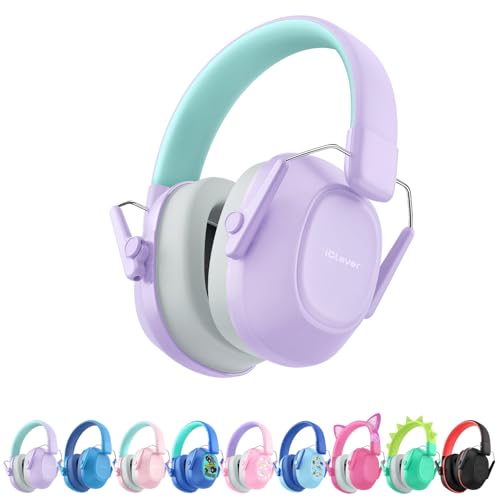
The iClever EM01 is the comfort pick, built around thick acoustic sponge inside the cups. The sponge measures 18 mm thick, and the published figure is 29 dB SNR, the highest in this guide. That thick padding also makes the cups gentle against small ears, which helps toddlers who refuse stiffer pairs. The headband adjusts to fit toddlers and young children, and the cups fold for travel.
This pair suits toddlers who are sensitive to pressure or to loud rooms. The soft seal works well for school assemblies, birthday parties with music, and long car rides past road work. It also works for naps in noisy houses, since the sponge cushions the ear rather than pressing a hard shell against it.
The soft padding is also the limit. Thick sponge holds warmth, so a toddler may want the pair off after an hour in summer heat. The figure is strong, but no muff makes a loud event silent, and parents should still keep toddlers at a sensible distance from speakers and fireworks.
Who Should Skip It
Families with infants under one year should skip this guide and look at baby muffs instead. Baby muffs use soft elastic bands with no hard pressure point on the soft spot at the top of the skull, and toddler muffs use a firmer headband that can press there. Families with school-age children should look at kids muffs with longer headbands, since toddler pairs run small for heads past age five. A child who needs hearing protection every day for sensory reasons may need a pair chosen with a clinician rather than a general guide. And no muff in this guide replaces distance from the noise. Moving a toddler farther from speakers or fireworks does more than any pair can.
FAQ
What age are toddler ear muffs made for?
Toddler muffs are sized for roughly ages one to four. Baby muffs cover newborns through about age two with soft elastic bands, and kids muffs cover about ages three through fifteen with longer headbands. A three-year-old can fit either a toddler pair or a kids pair, so check the cup size and the headband length rather than the age label alone.
Do toddler ear muffs block all sound?
No muff blocks all sound, and that is by design. Passive muffs soften sharp peaks while still letting a child hear voices nearby. A toddler wearing muffs at a fireworks show still hears the crowd and a parent speaking close by, just at a lower level. If a child cannot hear a normal voice at arm’s length, the fit is wrong or the event is too loud for a toddler.
Can a toddler wear ear muffs on a flight?
Yes, and flights are one of the best uses for them. Takeoff and landing are the loudest parts, and muffs help a toddler sleep through both. Put the muffs on before the engines spool up, and check the seal after the child settles into the seat. Folding pairs pack easily into a carry-on, and a spare pair in the diaper bag covers the return flight.
How do I get a toddler to keep ear muffs on?
Let the child try the pair at home first, in a quiet room, for a few minutes at a time. Let the child pick the color when there is a choice. Put the muffs on before the noise starts rather than after the child is already upset. A pair that fits well and feels light is far easier to keep on than a pair that pinches, so fit matters more than any figure.
Final Verdict
The Dr.meter EM100 Kids Earmuffs are the best toddler ear muffs for most families because one adjustable pair fits toddlers through adults, folds flat, and seals well at fireworks, flights, and concerts. Families who want the narrowest toddler fit should buy the Dr.meter Toddler Ear Protection Muffs. Families watching cost should buy the ProCase pair, families needing two pairs should buy the Dr.meter EM300 two-pack, and families with a pressure-sensitive toddler should buy the iClever EM01. Whichever pair you choose, fit it at home first, check the seal before the noise starts, and keep your toddler at a sensible distance from the loudest sound.
Product and ASIN Reference
| Product | ASIN |
|---|---|
| Dr.meter EM100 Kids Earmuffs | B01LWYWH43 |
| Dr.meter Toddler Ear Protection Muffs | B0B6FR87B3 |
| ProCase Kids Noise Cancelling Earmuffs | B07QHBYT26 |
| Dr.meter EM300 Kids Earmuffs 2-Pack | B0BJZZP1Y8 |
| iClever EM01 Kids Earmuffs | B0CJ2ZV4H4 |