Key takeaways
- Find the best extension ladders for two-story gutters, roof work, and home repairs. Compare fiberglass and aluminum models by length, rating, and weight.
A good extension ladder is the tool that makes second-story work possible: cleaning gutters, painting eaves, or reaching a high window. The wrong ladder is too short, too heavy to raise alone, or rated for less than you plus your tools. This guide compares five traditional two-section extension ladders in fiberglass and aluminum, from 16 to 28 feet.
As an Amazon Associate, we earn from qualifying purchases.
Quick Answer
For most homeowners, the Werner D6224-2 is the best extension ladder to buy first. Its 24-foot fiberglass frame, Type IA rating for 300 pounds, and 23-foot reach handle two-story gutters and eaves, while its non-conductive rails suit work near a service drop. Shorter jobs call for the 16-foot Louisville FE3216, and two-story homes with higher eaves suit the 28-foot Louisville FE3228.
How to Choose an Extension Ladder
Length comes first, and the right length is the shortest ladder that still reaches the job safely. Measure from the ground to the support point, then add three feet, because the top of the ladder should extend three feet above the surface you step onto. A 24-foot ladder gives about 23 feet of reach, which covers most two-story eaves, while a 28-foot ladder suits taller two-story homes and a 16-foot ladder covers single-story gutters, garage roofs, and sheds. Buying longer than the job means hauling extra weight for no gain.
Material is the second decision. Fiberglass rails do not conduct electricity, which matters near overhead wires or a service drop. Aluminum is lighter for the same length and rating, which matters if you carry the ladder far or raise it alone, but aluminum rails conduct electricity, so aluminum belongs away from power lines. Both materials last for years when stored out of direct sun and kept clean.
Duty rating is the third decision, and it covers you plus everything you carry. Type III covers 200 pounds, Type II 225, Type I 250, Type IA 300, and Type IAA 375. Add your weight, your clothes, your tools, and any materials before choosing, and leave margin. Most homeowners land on Type IA, which covers a wide range of bodies and tool loads.
Weight and handling deserve a close look. A 24-foot aluminum ladder weighs about 45 pounds, while the same length in fiberglass weighs about 52 pounds, and a 28-foot fiberglass ladder approaches 58 pounds, a two-person lift for many people. Look for a rope and pulley system, rung locks that engage with a clear click, slip-resistant D-rungs, and swivel safety shoes. A ladder that meets ANSI and OSHA standards and carries a UL listing gives an extra layer of assurance.
Set the ladder at the right angle: the base should sit one foot out from the wall for every four feet of height, about 75 degrees. Check both feet sit level and solid, lock the fly section before climbing, face the ladder, and keep three points of contact. Never stand on the top three rungs, never lean sideways past the rails, and never use a ladder with a frayed rope, a cracked rail, or a lock that does not engage.
Best Extension Ladders
Werner D6224-2 Fiberglass Extension Ladder — Best Overall

The Werner D6224-2 is the ladder most homeowners should buy first, because it covers the widest range of jobs without excess weight or length. Its 24-foot fiberglass frame reaches 23 feet, which covers two-story gutters, eaves, and siding on most homes. The Type IA rating covers 300 pounds, which leaves room for a heavier climber plus a tool belt and a bucket. Fiberglass rails do not conduct electricity, so this ladder suits work near a service drop where an aluminum ladder would be the wrong choice.
Werner builds this ladder in its D6200-2 series, a line that contractors know well. The 1-5/8 inch Traction-Tred D-rungs are slip-resistant and give a flat surface for the foot, and the ALFLO rung joint keeps the rails twist-proof under load. A rope and pulley system raises the fly section from the ground, and the base and fly sections separate, so the base can serve as a shorter ladder on its own.
At about 52 pounds, the D6224-2 is heavy enough that raising it alone takes care and a steady setup. That weight is the trade for fiberglass rails and a 300-pound rating, and for a homeowner who wants one ladder for gutters, painting, and roof-edge work, this is the balanced pick.
Specs
- Material: Fiberglass
- Length: 24 ft
- Duty rating: Type IA
- Load capacity: 300 lb
- Weight: 52 lb
- Reach: 23 ft
- Max working height: 21 ft
- Rungs: 1-5/8 in slip-resistant D-rungs
- Rope and pulley: Yes
- Standards: ANSI A14.5, OSHA
Louisville FE3228 Fiberglass Extension Ladder — Best for Two-Story Homes
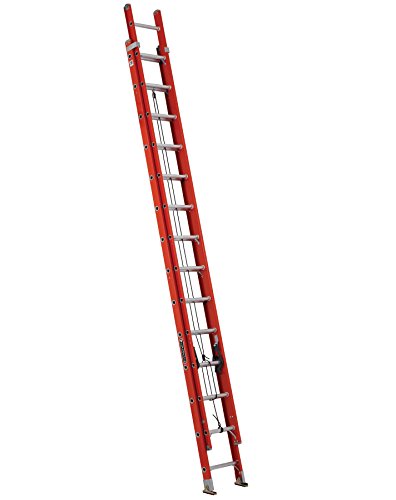
The Louisville FE3228 is the pick for taller two-story homes, where a 24-foot ladder stops short of the eaves. Its 28-foot frame extends to 25 feet, which reaches higher gutters and rooflines without forcing the climber to overreach. Like the Werner above, it carries a Type IA rating for 300 pounds and fiberglass rails that do not conduct electricity, so it suits the same jobs at greater height.
Louisville fits this ladder with MAXLOCK rung locks, which hold the fly section firmly once extended, and steel swivel safety shoes that grip the ground and sit flat or in a spur position on soft soil. The D-rungs give a flat, secure footing for painting, siding work, and gutter cleaning on a full two-story home.
The cost of the extra reach is weight. At about 58 pounds, the FE3228 is a two-person lift for many homeowners, and it needs a long storage space. Buy it when the eaves measure beyond a 24-foot ladder, and raise it with a helper.
Specs
- Material: Fiberglass
- Length: 28 ft
- Duty rating: Type IA
- Load capacity: 300 lb
- Weight: About 58 lb
- Max extension: 25 ft
- Rung locks: MAXLOCK
- Shoes: Steel swivel safety shoes
- Rungs: D-rungs
Werner D1524-2 Aluminum Extension Ladder — Best Aluminum Extension Ladder

The Werner D1524-2 is the pick for buyers who want aluminum, the lighter way to reach 24 feet. At about 45 pounds, it weighs roughly 7 pounds less than the fiberglass ladder of the same length, and that difference shows when carrying the ladder around a yard or raising it alone. It still carries a Type IA rating for 300 pounds, so the weight saving does not cost load capacity.
Werner builds this ladder with 3-inch stacked full I-beam rails for rigidity and 1-3/4 inch flat D-rungs for comfortable footing. The ALFLO rung joint keeps the rails twist-proof, and a rope and pulley system raises the fly section. The ladder is UL listed and built to ANSI A14.2.
The trade is material. Aluminum rails conduct electricity, so this ladder does not belong near overhead wires or a service drop, and any work near live equipment calls for fiberglass instead.
Specs
- Material: Aluminum
- Length: 24 ft
- Duty rating: Type IA
- Load capacity: 300 lb
- Weight: 45 lb
- Rungs: 1-3/4 in flat D-rungs
- Rails: 3 in stacked full I-beam
- Rope and pulley: Yes
- Standards: ANSI A14.2, OSHA, UL listed
Louisville FE3216 Fiberglass Extension Ladder — Best Short Extension Ladder
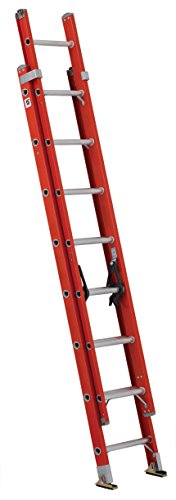
The Louisville FE3216 is the pick for single-story work, where a 24-foot ladder is more than the job needs. Its 16-foot frame reaches just under 16 feet, which covers single-story gutters, garage roofs, sheds, and low eaves. At about 30 pounds, it is the lightest ladder in this guide by a clear margin, and one person can carry and raise it without a helper.
Short does not mean light-duty here. The FE3216 carries the same Type IA rating for 300 pounds as the longer ladders in this guide, and its fiberglass rails do not conduct electricity. Louisville fits it with MAXLOCK rung locks and steel swivel safety shoes, and its D-rungs are serrated for grip in wet weather. The two 8-foot sections close to just over 8 feet, so the ladder stores on a garage wall or in a van. It will not reach a two-story eave, so measure first.
Specs
- Material: Fiberglass
- Length: 16 ft
- Duty rating: Type IA
- Load capacity: 300 lb
- Weight: About 30 lb
- Max reach: 15 ft 11 in
- Max extended length: 13 ft
- Closed length: 101.5 in
- Sections: 2 x 8 ft
- Rung locks: MAXLOCK
- Shoes: Steel swivel safety shoes
Louisville FE3224 Fiberglass Extension Ladder — Best Value

The Louisville FE3224 is the value pick in this guide, because it gives the same core capability as the best overall ladder at a friendlier position in the range. Its 24-foot fiberglass frame carries a Type IA rating for 300 pounds, reaches the same two-story gutters and eaves, and uses the same kind of non-conductive rails. For a homeowner who wants a dependable 24-foot fiberglass ladder without paying for the top of the range, this is the sensible buy.
Louisville fits the FE3224 with MAXLOCK rung locks and steel swivel safety shoes with a metal shield, and its D-rungs are serrated for grip in wet weather. At 50 pounds, it sits between the aluminum Werner and the heavier fiberglass models, and it is manageable for one careful person to raise. Its simple two-section design has few parts to wear out.
Specs
- Material: Fiberglass
- Length: 24 ft
- Duty rating: Type IA
- Load capacity: 300 lb
- Weight: 50 lb
- Max height: 148 in
- Rung locks: MAXLOCK
- Shoes: Steel swivel safety shoes
- Rungs: Serrated D-rungs
Who Should Skip It
An extension ladder is not the right tool for every home. If all of your work is indoors or below 10 feet, a folding step ladder is safer, easier to store, and easier to move through doorways. If you cannot lift 45 to 58 pounds or raise a long ladder alone, ask a helper or hire the work out, since a ladder that is too heavy to control is a hazard. Anyone who works near overhead power lines should skip aluminum entirely and choose fiberglass, and anyone whose combined weight with tools passes 300 pounds needs a Type IAA ladder rated for 375 pounds instead of the Type IA models in this guide. A ladder that also needs to work as a step ladder or a stairway ladder is a different product, the multi-position kind, and none of the ladders here convert that way.
FAQ
What size extension ladder do I need for a two-story house?
Start with 28 feet for a two-story house, and measure before buying. Measure from the ground to the support point, then add three feet so the ladder extends above the roof edge or gutter line. A 24-foot ladder reaches about 23 feet, which covers many two-story eaves, but taller homes need the 25-foot extension of a 28-foot ladder.
Is fiberglass or aluminum better for an extension ladder?
Fiberglass is better near electricity, because its rails do not conduct current, and it suits work near a service drop or overhead wires. Aluminum is better for carrying, because it is lighter at the same length and rating, and it suits open yard work away from power lines. Both materials meet the same duty ratings and last for years with basic care.
How do I set up an extension ladder safely?
Set the base one foot out from the wall for every four feet of height, about a 75-degree angle, on level and solid ground. Extend the fly section with the rope and pulley, check that the rung locks engage fully, and extend the top three feet above the support point. Face the ladder while climbing, keep three points of contact, and never stand on the top three rungs or lean sideways past the rails. Inspect the rope, locks, rails, and shoes before each use.
What does Type IA mean on an extension ladder?
Type IA is a duty rating that covers 300 pounds, counting the climber plus clothes, tools, and materials. The scale runs from Type III at 200 pounds, through Type II at 225 and Type I at 250, to Type IA at 300 and Type IAA at 375. Add your weight and everything you carry before choosing, and leave margin.
Final Verdict
The Werner D6224-2 is the best extension ladder for most homeowners, because its 24-foot fiberglass frame, Type IA rating, and 23-foot reach cover two-story gutters and eaves without excess weight. Buyers with taller two-story homes should step up to the 28-foot Louisville FE3228, and buyers who want the lightest carry should choose the aluminum Werner D1524-2. The 16-foot Louisville FE3216 suits single-story work, and the Louisville FE3224 is the value pick. Measure the job, add three feet above the support point, and choose fiberglass whenever the ladder could come near power lines.
Product and ASIN Reference
| Product | ASIN |
|---|---|
| Werner D6224-2 Fiberglass Extension Ladder | B00004RKB5 |
| Louisville FE3228 Fiberglass Extension Ladder | B000U0JD4E |
| Werner D1524-2 Aluminum Extension Ladder | B0000224LY |
| Louisville FE3216 Fiberglass Extension Ladder | B000KL6PGW |
| Louisville FE3224 Fiberglass Extension Ladder | B0017ZRIFM |